

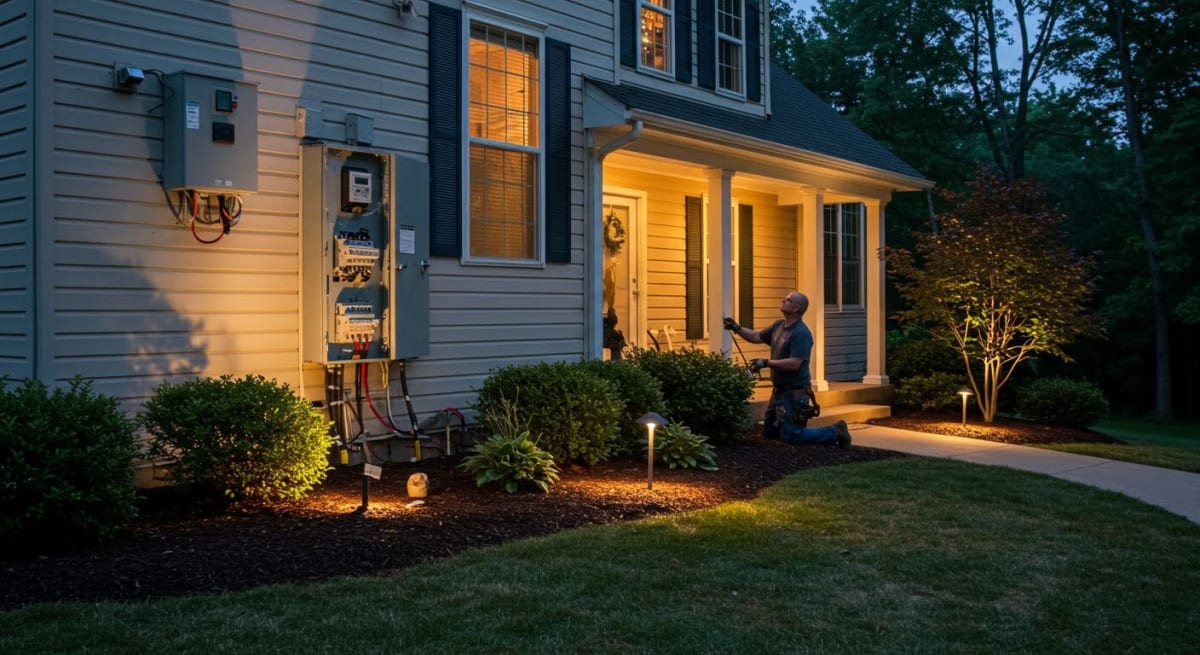
What Is Landscape Lighting and Why Lexington Homeowners Need It
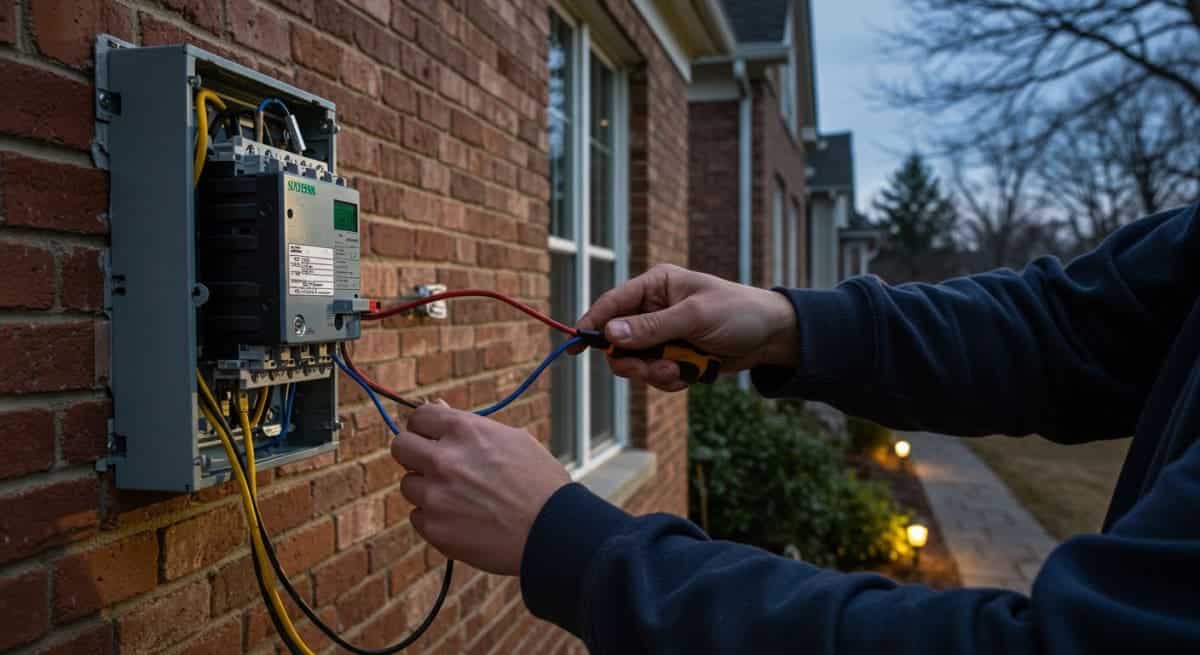
Landscape lighting is a permanently installed outdoor electrical system that uses strategically placed fixtures to illuminate pathways, architectural features, plants, and hardscaping for safety, security, and aesthetic enhancement. Unlike temporary decorative lights, professional landscape illumination integrates low-voltage transformers, weather-rated fixtures, and smart controls into your property’s electrical infrastructure.
For Lexington homeowners, landscape lighting serves three essential purposes that go far beyond simple decoration. First, it provides critical safety lighting along walkways, steps, and driveways—especially important during Kentucky’s shorter winter days when you’re leaving for work in darkness or returning home after sunset. Second, exterior lighting acts as a powerful security deterrent, eliminating dark corners where intruders might hide around your property. Third, properly designed outdoor lighting dramatically increases curb appeal by showcasing your home’s architecture and mature landscaping common in established Lexington neighborhoods.
Effective landscape lighting balances aesthetic appeal with functional safety, using layered techniques including path lighting, uplighting, downlighting, and accent lighting to create depth and dimension in outdoor spaces. Property values in central Kentucky neighborhoods increase measurably when homes feature professional landscape lighting design services, with real estate professionals consistently noting enhanced first impressions during evening showings.
The investment pays dividends year-round in Kentucky’s climate. Well-designed systems highlight seasonal changes—from spring blooms on your Bradford pears to winter architectural features when deciduous trees are bare—while providing essential visibility through ice storms and early-setting winter darkness that central Kentucky experiences November through February.
Essential Landscape Lighting Design Techniques for Kentucky Properties
Professional landscape lighting transforms your outdoor spaces using five proven techniques that balance aesthetics, safety, and functionality. Each method serves a specific purpose in creating comprehensive outdoor lighting design that highlights your property’s best features while ensuring safe navigation after dark.
Path and Safety Lighting Placement
Path lighting fixtures illuminate walkways, driveways, and steps to prevent accidents while guiding visitors to your entrance. “Path lighting fixtures should be spaced 8-10 feet apart and positioned 14-18 inches from walkway edges to create overlapping pools of light that eliminate dark spots and meet safety standards for residential properties.” Properly spaced path lighting at 8-10 foot intervals reduces trip-and-fall incidents on walkways by creating consistent illumination—particularly important for older Lexington homes with uneven bluestone paths or brick walkways common in Chevy Chase and Ashland Park neighborhoods.
Uplighting Trees and Architectural Elements
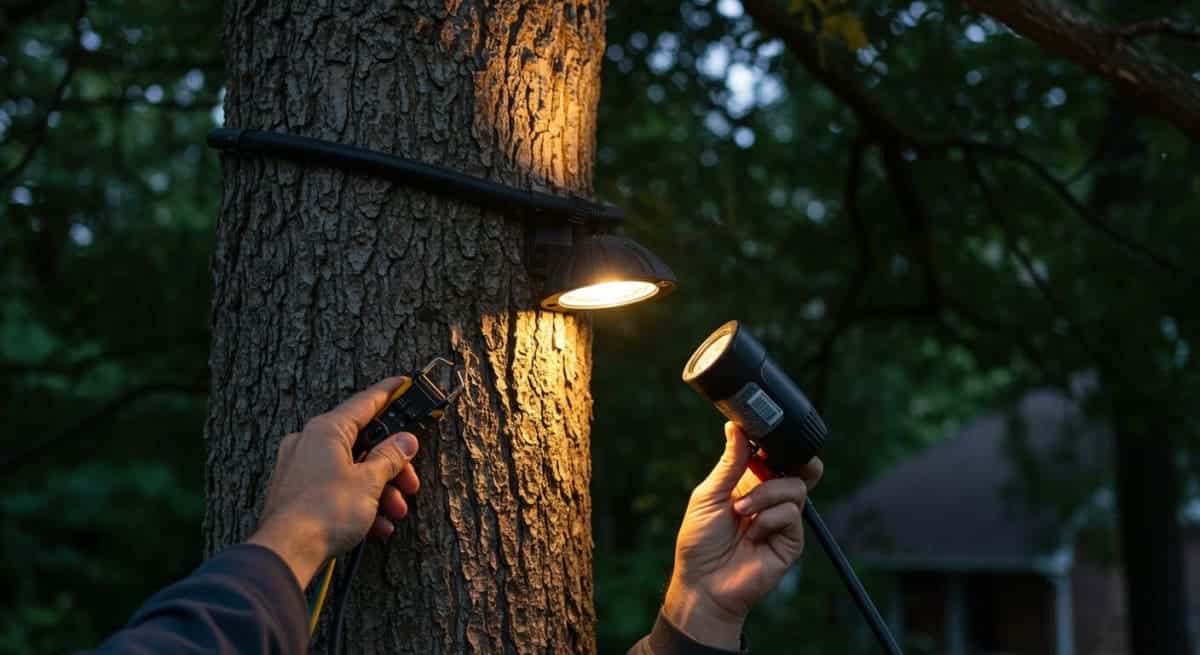
Uplighting is a technique that positions ground-level fixtures to direct light upward onto trees, columns, or building facades that creates dramatic vertical shadows and emphasizes architectural details. For optimal effect, place uplights 2-3 feet from tree trunks or 3-5 feet from building features. This landscape lighting idea works exceptionally well on Kentucky properties with mature oak and maple trees or historic brick and stone exteriors.
Accent and Focal Point Lighting
The five core landscape lighting techniques—path lighting, uplighting, downlighting, spotlighting, and hardscape lighting—each serve distinct purposes and work together to create comprehensive outdoor illumination designs. Downlighting from elevated positions mimics natural moonlight and provides broad ambient coverage. Spotlighting directs narrow beams onto specimen plants or garden features. Hardscape lighting illuminates walls, steps, patios, and deck areas with integrated fixtures that enhance outdoor living spaces.
- Path lighting spaced 8-10 feet apart for walkways and driveways
- Uplighting positioned 2-3 feet from trees for dramatic vertical illumination
- Downlighting from elevated positions to create moonlight effects
- Spotlighting with narrow beams for specimen plants and focal points
- Hardscape lighting integrated into walls, steps, and patio surfaces
- Silhouette lighting placed behind features to create outline effects
- Shadowing techniques that project foliage patterns onto walls
Need help determining which lighting techniques will work best for your property? Doctor Electric’s landscape lighting specialists can assess your Lexington home and create a custom design plan.
Understanding Low-Voltage Landscape Lighting Systems
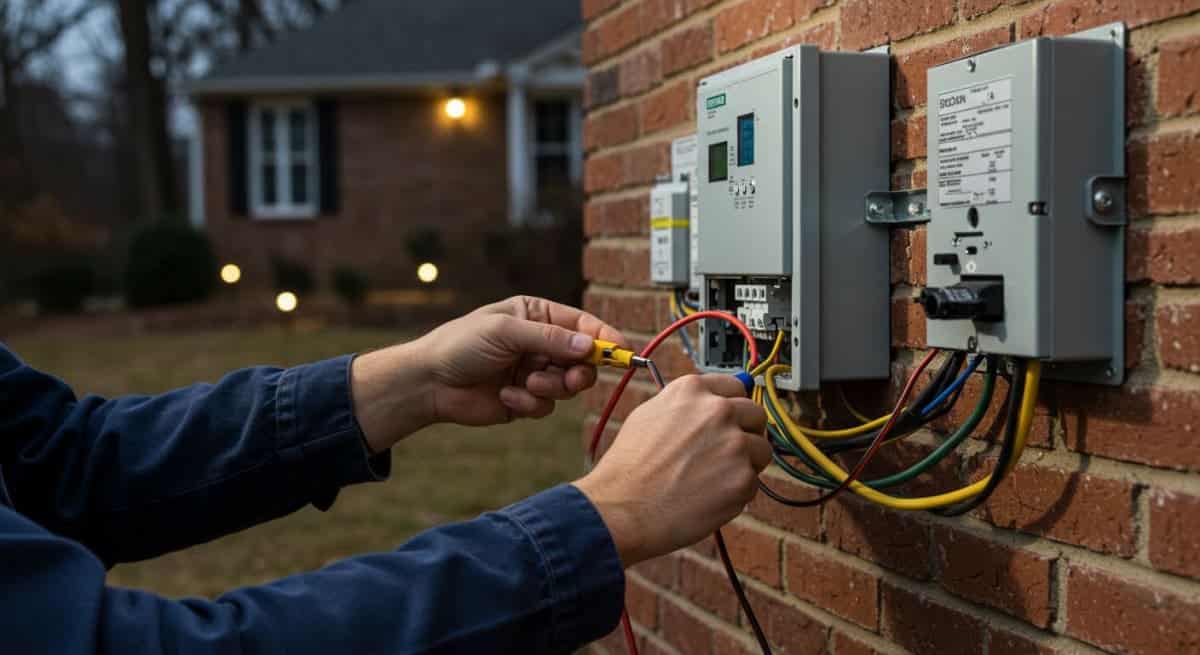
A low-voltage lighting system is an outdoor electrical installation that operates at safe 12V or 24V levels instead of standard household current, delivering energy-efficient illumination while minimizing shock hazards and meeting NEC safety standards. These systems form the backbone of professional outdoor lighting design across central Kentucky properties, from historic Lexington neighborhoods with mature trees to modern commercial developments requiring sophisticated multi-zone control.
How Transformers Power Your Landscape Lighting
Professional landscape lighting requires dedicated low-voltage circuits with properly sized transformers, typically 12-volt or 24-volt systems that prevent overloading and ensure consistent illumination across all fixtures. The landscape lighting transformer connects directly to your home’s 120V electrical panel through a dedicated circuit with GFCI protection, stepping down the voltage before distributing power to LED fixtures positioned throughout your property. This configuration allows safe DIY fixture adjustments after installation while requiring licensed electrical expertise for the initial transformer connection and circuit protection.
Most residential installations in Lexington use transformers ranging from 150 watts for small gardens to 600 watts for expansive properties with dozens of fixtures. The transformer location matters significantly—placing it too far from your lighting zones creates voltage drop that dims fixtures farthest from the power source, while proper placement within 100 feet of fixture clusters maintains consistent brightness.
Calculating Proper System Capacity
Accurate load calculations prevent the frustrating dimming that occurs when homeowners add “just one more” fixture to an already maxed-out transformer. Total the wattage of all LED landscape fixtures you plan to install, then select a transformer rated for at least 20% above that combined load to accommodate voltage conversion inefficiencies and future expansion.
| System Component | 120V Line-Voltage | 12V Low-Voltage |
|---|---|---|
| Operating Voltage | 120 volts AC | 12-24 volts AC |
| Shock Hazard Risk | Potentially fatal | Minimal |
| Installation Requirements | Licensed electrician mandatory | Transformer requires electrician, fixtures DIY-friendly |
| Wire Burial Depth | 18 inches minimum (conduit) | 6 inches (direct burial cable) |
| Typical Fixture Cost | $40-150 each | $25-100 each |
Wire gauge selection directly impacts system performance—12-gauge wire handles longer runs with minimal voltage drop, while 14-gauge works for shorter distances under 50 feet. Professional landscape lighting installation in Lexington includes precise voltage drop calculations that account for wire resistance, run length, and fixture placement to deliver uniform illumination across every zone of your property.
Choosing the Right Landscape Lighting Fixtures for Central Kentucky Weather
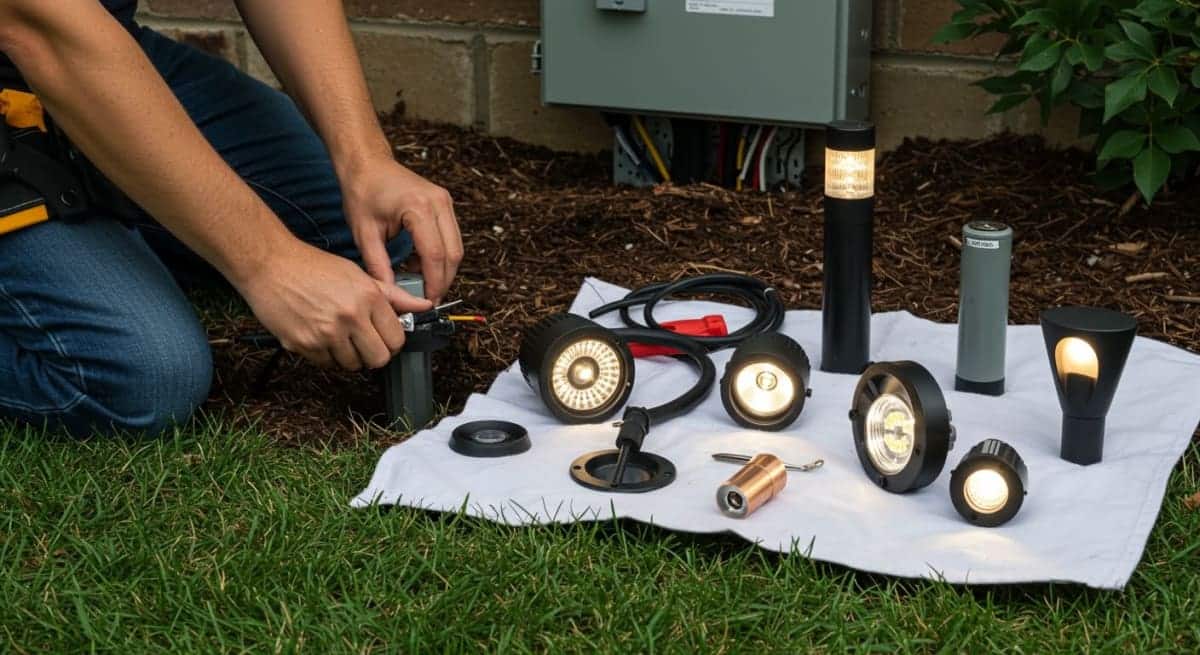
Selecting outdoor lighting fixtures for your Lexington property requires understanding how central Kentucky’s climate impacts electrical installations year-round. In central Kentucky’s climate, landscape lighting fixtures must be rated for wet locations with IP65 or higher ratings to withstand freeze-thaw cycles, heavy rain, and humidity that characterize Bluegrass Region weather patterns.
Weatherproof Ratings and Material Selection
An IP rating is an Ingress Protection classification that measures how well electrical fixtures resist moisture and debris penetration. Landscape lighting fixtures require IP65 or higher ratings to withstand central Kentucky’s freeze-thaw cycles and annual rainfall averaging 45-50 inches. For submersible applications like pond lights or well lights near downspouts, IP67 or IP68 ratings ensure complete protection.
Material durability directly affects fixture lifespan in Fayette County’s temperature swings from below freezing to 90°F+ summers. Brass and stainless steel construction resists corrosion from humidity and rain, while composite materials offer budget-friendly alternatives with UV-resistant coatings. Copper fixtures develop a natural patina over time, adding character to traditional and craftsman-style homes common in established Lexington neighborhoods.
| Fixture Type | Best Application | Beam Angle | Mounting Style | IP Rating Needed |
|---|---|---|---|---|
| Path Lights | Walkways, driveways | Wide flood (60-120°) | Stake-mount | IP65 |
| Uplights | Trees, architectural features | Spot (10-30°) | Stake or well-mount | IP67 |
| Well Lights | In-ground accents | Flood (30-60°) | In-grade housing | IP68 |
| Hardscape Lights | Walls, steps, columns | Spot to flood (varies) | Surface-mount | IP65 |
| Deck/Step Lights | Outdoor living areas | Wide flood (90°+) | Recessed hardscape | IP65 |
Matching Fixture Styles to Home Architecture
Your LED landscape lights should complement your home’s architectural style for cohesive curb appeal. Contemporary homes benefit from sleek, low-profile fixtures with clean lines, while traditional colonial and Victorian properties in Lexington’s historic districts pair well with classic lantern-style path lights and ornamental uplights. Craftsman-style bungalows common in Chevy Chase and Woodland Park neighborhoods look best with warm-finished brass or copper fixtures that echo the era’s attention to detail.
Beam angle selection determines how light spreads across your landscape. Spot beams (10-30°) create dramatic uplighting for mature trees and architectural columns. Flood beams (30-60°) illuminate flower beds and foundation plantings. Wide flood beams (60-120°) provide ambient pathway lighting and broad wash effects for retaining walls.
Quality weatherproof landscape lighting systems backed by 5-10 year warranties deliver reliable performance through Kentucky’s seasonal extremes. Doctor Electric installs LED landscape fixtures engineered specifically for outdoor exposure, ensuring your investment withstands central Kentucky weather while maintaining consistent light output and color temperature for years.
- Brass and copper fixtures offer superior corrosion resistance in humid climates
- Stainless steel provides modern aesthetics with exceptional weather durability
- Composite materials with UV-resistant coatings deliver budget-friendly longevity
- IP65 ratings protect against heavy rain and moisture intrusion
- IP67-IP68 ratings required for in-ground and submersible applications
- Beam angle selection impacts fixture placement and spacing calculations
LED vs. Halogen: Why Modern Landscape Lighting Technology Matters
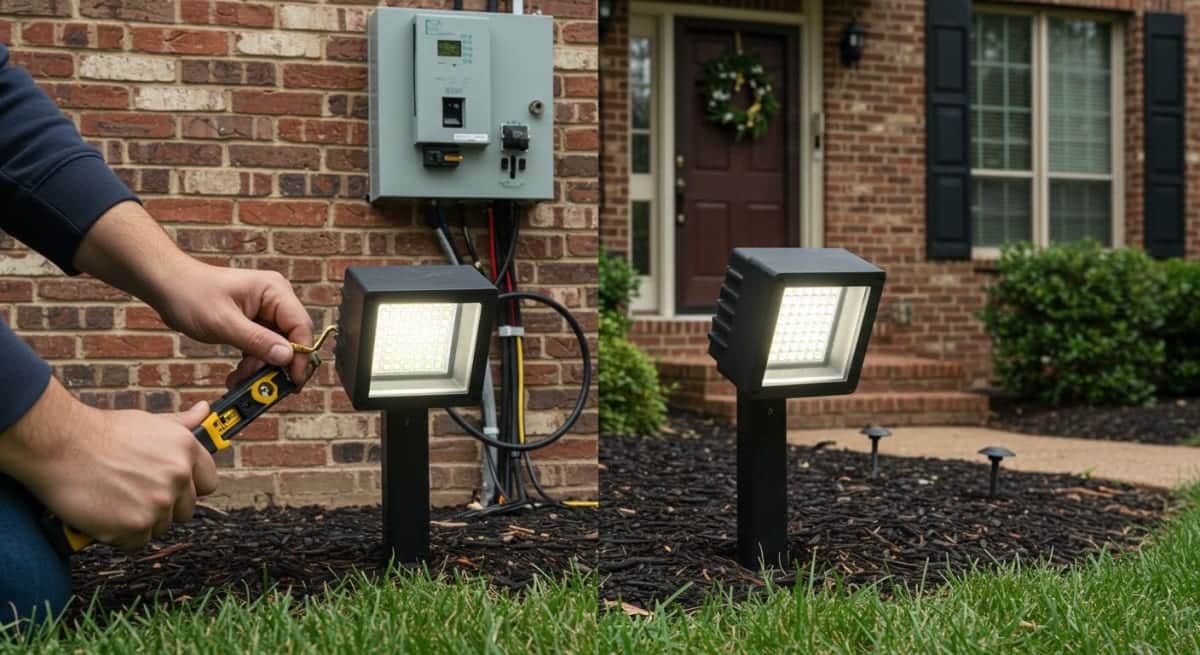
Modern LED landscape lighting systems draw 80-90% less power than traditional halogen fixtures while providing 50,000+ hour lifespans, reducing both energy costs and the frequency of service calls for homeowners. For Lexington homeowners evaluating outdoor lighting upgrades, understanding the dramatic differences between LED and halogen landscape lighting technology directly impacts long-term operating costs and maintenance schedules.
Color temperature is a measurement in Kelvin that describes the perceived warmth or coolness of light output that affects how your landscaping and architectural features appear at night. LED landscape lights offer precise color temperature options from warm 2700K to cool 5000K, while halogen fixtures produce a fixed warm output around 3000K with inferior color rendering capabilities.
| Feature | LED Landscape Lights | Halogen Landscape Lights |
|---|---|---|
| Power Consumption | 3-7 watts per fixture | 20-50 watts per fixture |
| Lifespan | 50,000+ hours | 2,000-4,000 hours |
| Heat Generation | Minimal (cool to touch) | Extreme (fire hazard near mulch) |
| Dimming Capability | Smooth 0-100% with smart controls | Limited range, poor performance |
| Maintenance Frequency | Rarely (15+ years typical) | Annual bulb replacement |
| Annual Cost (12 fixtures) | $18-42 electricity | $120-300 electricity + bulbs |
What Are the Key Benefits of LED Landscape Lighting?
LED technology has revolutionized landscape lighting by dramatically reducing energy consumption and maintenance requirements while offering superior color rendering and dimming capabilities compared to older halogen systems. The benefits extend beyond simple energy savings:
- Energy consumption reduced by 80-90% compared to halogen fixtures
- Lifespan exceeds 50,000 hours, eliminating frequent bulb replacements
- Cool operation prevents mulch fires and reduces transformer heat buildup
- Smooth dimming from 0-100% enables dynamic lighting scenes
- Smart integration compatible with voice control and scheduling systems
- Superior color rendering accuracy enhances plant and stone appearance
- Weather-resistant solid-state components withstand Kentucky’s freeze-thaw cycles
- Lower voltage drop allows longer wire runs from transformers
For a typical Lexington property with twelve path lights operating five hours nightly, switching from 35-watt halogen to 5-watt LED fixtures saves approximately 547 kWh annually—reducing electricity costs by roughly $60-80 per year while eliminating the labor cost of annual bulb replacement on a ladder.
Heat generation presents a genuine fire safety concern with halogen landscape lighting. Halogen bulbs operate at surface temperatures exceeding 500°F, creating ignition risks when fixtures contact dry mulch, fallen leaves, or pine straw common in Kentucky landscapes. LED fixtures remain cool enough to touch during operation, meeting NEC Article 411 safety requirements without creating fire hazards near combustible landscaping materials.
The dimming capabilities of energy-efficient outdoor lighting distinguish modern LED systems from legacy halogen installations. LED drivers provide smooth, flicker-free dimming across the entire 0-100% range, enabling sunset fading effects and scene presets through smart lighting controllers. Halogen dimmers typically function poorly below 20% intensity and reduce bulb lifespan significantly when operated at reduced power levels.
Ready to upgrade to energy-efficient LED landscape lighting? Doctor Electric provides expert installation with properly sized transformers and smart control options throughout central Kentucky.
Smart Landscape Lighting Controls and Automation Options
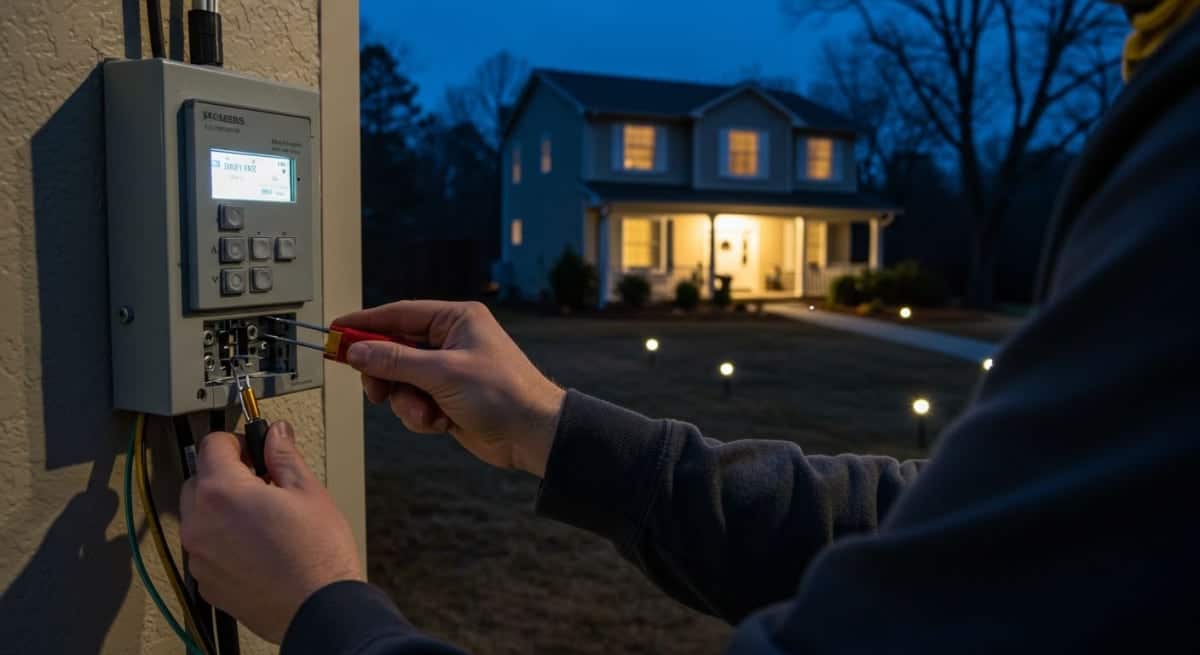
Modern landscape lighting systems transform how Lexington homeowners manage their outdoor illumination. Smart landscape lighting controllers range from basic mechanical timers to sophisticated systems that integrate with your entire home automation platform. The right control system reduces energy waste while enhancing convenience and security.
In 2026, over 65% of new landscape lighting installations in Lexington incorporate smart control systems for convenience and efficiency. These systems provide multiple automation options tailored to your lifestyle and property needs:
- Astronomical timers that automatically adjust for seasonal sunrise and sunset changes in central Kentucky
- Smartphone app control for remote access from anywhere
- Integration with Alexa, Google Assistant, and Apple HomeKit platforms
- Custom dimming schedules for different occasions and times
- Vacation modes that simulate occupancy for enhanced security
- Zone-based control for front yard, backyard, and accent lighting areas
Smart landscape lighting controllers with astronomical timers automatically adjust on/off schedules based on actual sunset and sunrise times in Lexington, eliminating manual seasonal adjustments and reducing unnecessary runtime by 15-20% annually. This precision prevents your lights from operating during daylight hours as seasons change throughout the year.
Smart landscape lighting systems provide convenience through automated scheduling, remote control, and integration with home automation platforms while reducing energy waste through precise timing and dimming features. Doctor Electric installs control systems that match your technical comfort level—from simple digital timers to fully networked outdoor lighting automation that responds to your voice commands and adjusts brightness based on ambient light conditions.
Professional Landscape Lighting Installation vs. DIY: What Lexington Homeowners Should Know
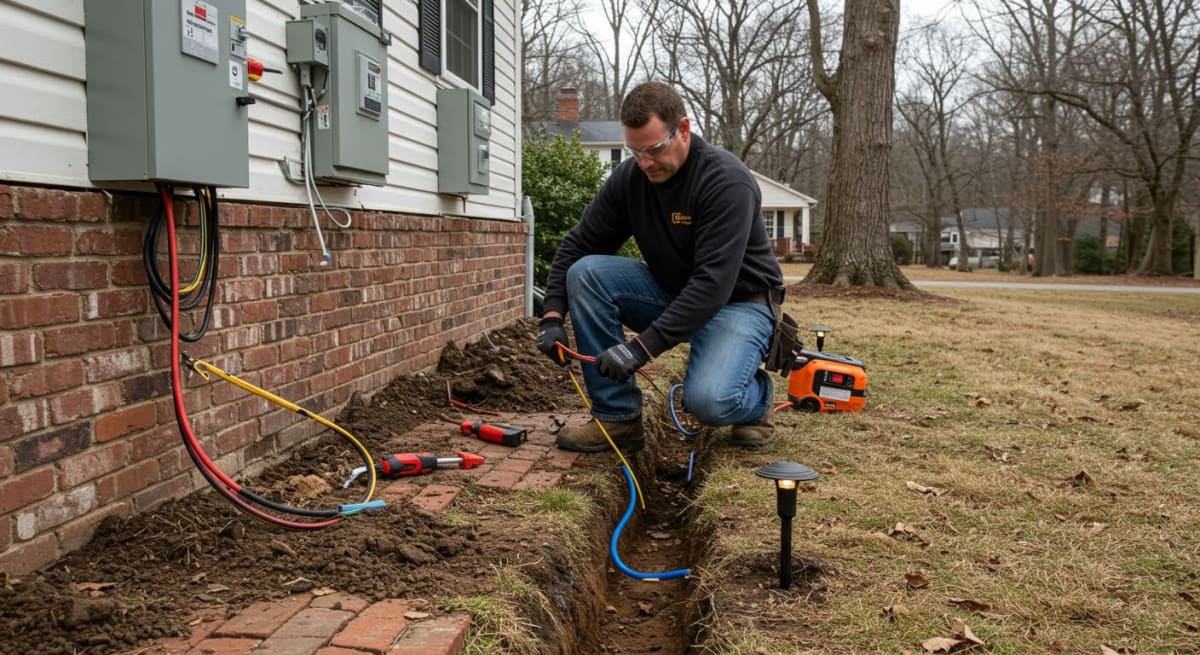
Many Lexington homeowners consider DIY landscape lighting installation to save money, but understanding the electrical code requirements and safety considerations helps you make an informed decision. The difference between a professionally installed system and a DIY project extends far beyond aesthetics—it impacts safety, longevity, and your home’s electrical integrity.
| Factor | DIY Installation | Professional Installation |
|---|---|---|
| Code Compliance | Often misses GFCI protection and burial depth requirements | Guaranteed NEC Article 411 compliance with permits |
| Transformer Sizing | Frequently undersized or overloaded, causing failures | Properly calculated for fixture load and voltage drop |
| Burial Depth | Shallow installations risk damage from lawn care | 6-18 inch depths based on voltage and protection type |
| Warranty Coverage | Voids manufacturer warranties on improper installation | Maintains full warranty protection with certified work |
| Time Investment | 20-40 hours for typical yard including learning curve | Professional crew completes in 1-2 days |
| Design Expertise | Trial and error placement, unbalanced lighting | Engineered fixture placement for optimal effects |
Electrical Code Compliance for Landscape Lighting
Landscape lighting systems in Lexington must comply with specific electrical code requirements that most DIYers overlook. Professionally installed landscape lighting systems require GFCI-protected circuits with properly buried conduit at 6-18 inch depths depending on voltage, meeting NEC Article 411 requirements that prevent shock hazards and ensure long-term reliability.
Line-voltage systems (120V) demand the same permits and inspections as any household electrical work. Low-voltage transformers need proper placement with weatherproof enclosures and correct wire gauge calculations to prevent voltage drop. Many homeowners discover code violations during home sales, requiring costly remediation that exceeds the original professional installation cost.
Safety Considerations for Outdoor Wiring
Outdoor electrical installations face moisture, temperature extremes, and physical damage risks that indoor wiring never encounters. GFCI protection becomes mandatory for all outdoor circuits, shutting off power within milliseconds when ground faults occur—a safety feature that prevents electrocution.
Professional installation ensures proper burial depths protect wiring from lawn mowers, aerators, and landscaping equipment. Kentucky’s freeze-thaw cycles stress improperly installed connections, creating arc faults and fire hazards. Licensed electricians use weatherproof junction boxes, sealed wire connectors, and corrosion-resistant materials designed for our central Kentucky climate.
When DIY makes sense:
- Replacing existing fixtures on established low-voltage systems
- Adding individual solar-powered path lights requiring no wiring
- Seasonal decorative lighting using manufacturer plug-and-play kits
- Troubleshooting blown bulbs or cleaning fixture lenses
When you need a licensed electrician:
- Installing new transformer connections to household electrical panels
- Running conduit and wiring for line-voltage landscape lighting
- Upgrading existing systems with smart lighting controllers
- Designing integrated systems with architectural and security lighting
- Any installation requiring permits or electrical inspections
Professional installation ensures proper electrical safety through GFCI protection, correctly sized transformers, weatherproof connections, and burial depths that comply with electrical codes while preventing future failures. The specialized tools required—trenchers, conduit benders, voltage testers, and wire pullers—represent significant investment for a one-time project.
Get professional landscape lighting installation that meets electrical codes and delivers stunning results. Contact Doctor Electric today for a free consultation and upfront pricing for your Lexington property.
Landscape Lighting Design Ideas for Different Lexington Property Types
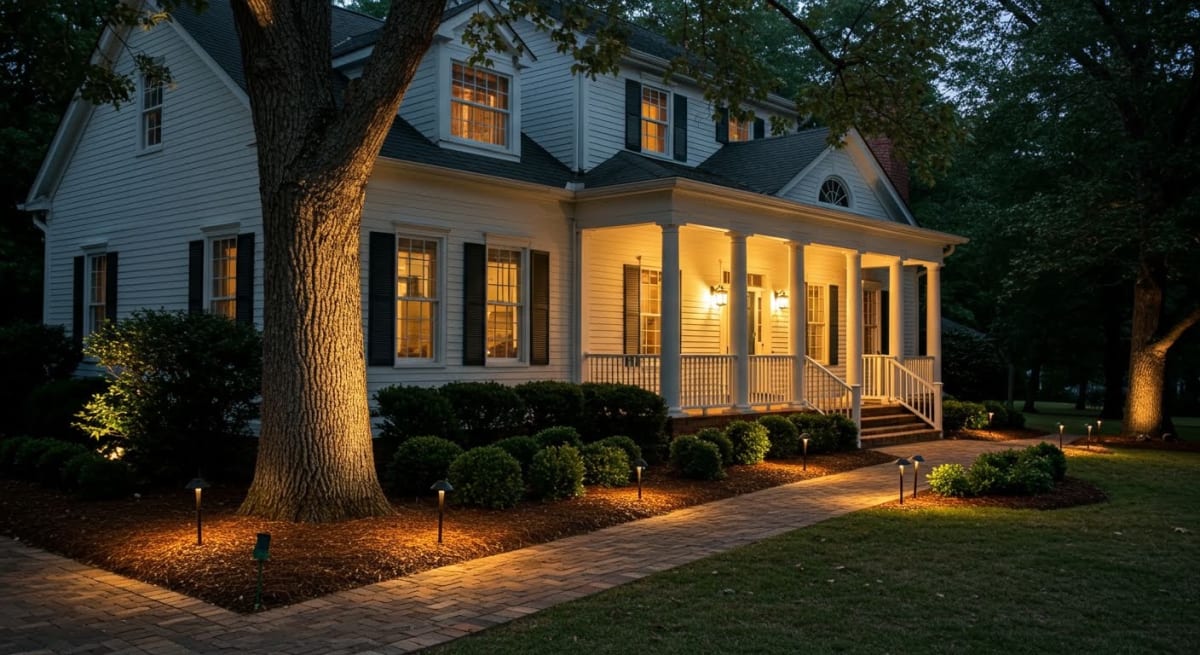
Different property styles in Lexington require tailored landscape lighting approaches, from architectural emphasis in historic neighborhoods to functional entertainment lighting in modern outdoor living spaces. Your home’s architectural style and lot characteristics determine which outdoor lighting design strategies will deliver the best curb appeal and functionality.
- Historic Ashland Park homes: Use directional spotlights to highlight Victorian columns, gingerbread trim, and stonework. Warm white LED fixtures (2700K) complement period architecture while keeping energy costs low on 120+ year old properties.
- Modern properties: Clean-lined path lights and recessed deck fixtures create contemporary property lighting without visual clutter. Minimalist bollards and linear wall washers emphasize horizontal planes and geometric landscaping.
- Ranch homes with mature trees: Uplighting mature trees in Lexington landscapes requires fixtures positioned at a distance equal to half the tree’s height to create balanced illumination that highlights canopy structure without causing light pollution. This technique showcases established oaks and maples common in Hartland and Gardenside neighborhoods.
- Properties with water features: Submersible fixtures rated for continuous underwater use transform ponds and fountains into nighttime focal points. GFCI protection is mandatory for all water feature circuits.
- Front yard emphasis: Allocate 60% of your landscape lighting budget to front-facing areas for maximum curb appeal and security benefits.
- Entertainment-focused backyards: Dimmable patio lighting, pergola downlights, and pathway illumination extend Kentucky’s outdoor season from April through October.