




docelectric.com /
What Is a Home Backup Generator and Why Do You Need One?
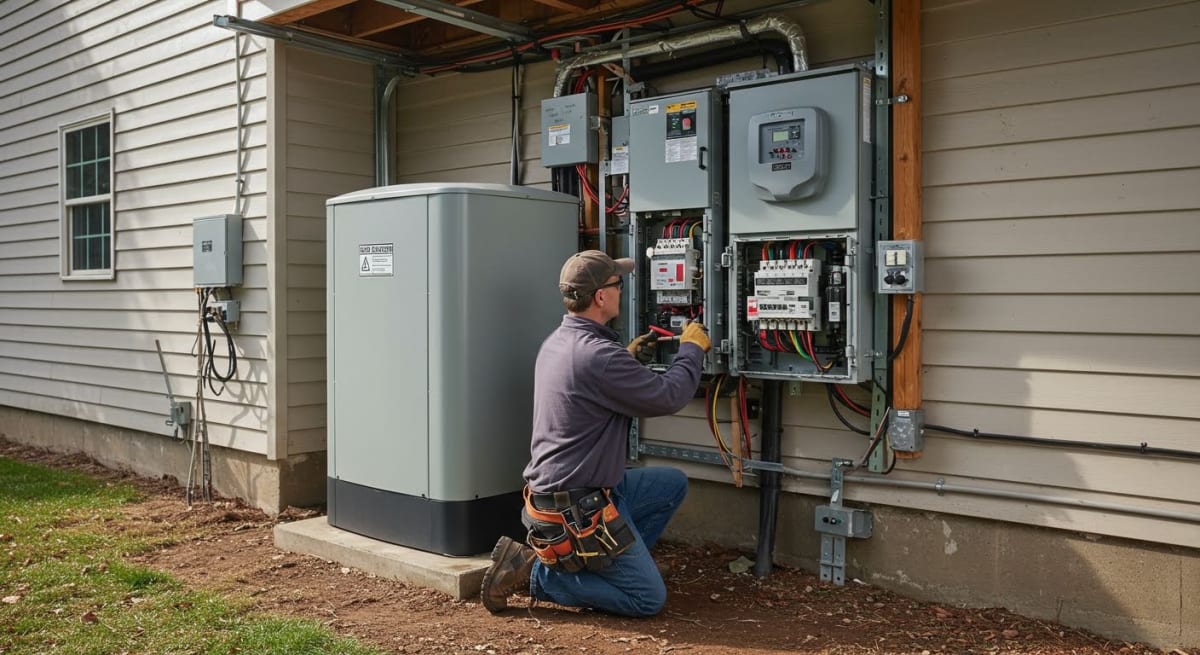
A home backup generator is a power generation system designed to supply electricity to residential circuits when utility power is interrupted, either through automatic transfer switching or manual connection. According to Doctor E pasted Can you apply these changes to the article? I tried to add this information as seamless as possible. I think it will be a lot easier to edit with the note section under each article. Please let me know if you have any questions. Article: Home Backup Generator – Complete Guide Portable Generators Price Range: $500 – $4,000 Equipment Cost: Increase both ends of the continuum by $2,000. Standby Generators Price Range: $10,000 – $18,000 Equipment Cost: Increase both ends of the continuum by $2,000. Interlock Systems Leave price as is. Additional Installation Factors Included Increase each end of the range by 60%. Blog: Recessed Lighting – Complete Guide Commercial New Construction: $75 – $250 Commercial Retrofit: $250 – $450 Article: Home Backup Generator for Kentucky Storm Season Header: Home Backup Generator Cost in Kentucky – Investment Breakdown Generator Pricing 14 KW – $8,500 18 KW – $10,000 22 KW – $11,500 24 KW – $14,000 Additional Components Automatic Transfer Switch – $2,000 45 to 60 Electric Panel Upgrades – $7,000 – $10,000 Article: EV Charger Installation – Complete Guide Header: EV Charger Installation Cost Breakdown for 2026 Panel Upgrade: $7,000 – $10,000 Hidden Costs Meter Base Replacement – $3,000 – $6,000 Grounding – $700 – $900 Article: Emergency Electrician Services in Lexington – When to Call Header: Electrician Cost and Pricing in Lexington Emergency Service Fee – $250 – $375 Seven Panel Replacement / Service Upgrade – $7,000 – $10,000 Storm Damage Emergency Repair – $3,000 – $6,000 Holiday / Severe Weather Response – $250 – $375 Show more 12:04 PM Deciphered pricing instructions and systematically updated article costs Deciphered pricing instructions and systematically updated article costs Looking at the provided article (Home Backup Generator – Complete Guide), I’ll apply the relevant changes: portable/standby price ranges in the comparison table, standby equipment cost table (+$2,000 each end), and additional installation factors (+60% each end). Ran 2 commands, read a file Ran 2 commands, read a file Here’s a summary of every change made to the Home Backup Generator article: Types Comparison Table Portable: $400–$3,000 → $500–$4,000 Standby: $3,000–$15,000+ → $10,000–$18,000 Inverter: unchanged at $800–$4,500 Equipment Cost Table (by size, +$2,000 each end) 7–10kW: $2,500–$4,000 → $4,500–$6,000 12–16kW: $3,500–$5,500 → $5,500–$7,500 18–22kW: $4,500–$7,000 → $6,500–$9,000 24–26kW: $6,500–$9,500 → $8,500–$11,500 30–48kW: $9,000–$15,000 → $11,000–$17,000 Intro cost paragraph updated to reflect new equipment range: $5,500–$17,000 equipment / $7,500–$22,000 total installed Additional Installation Factors (+60% each end) Concrete pad: $300–$600 → $480–$960 Permits & inspection: $200–$800 → $320–$1,280 Conduit & wiring: $400–$1,000 → $640–$1,600 Load calculation & design: $150–$400 → $240–$640 The other articles you listed (Recessed Lighting, Kentucky Storm Season, EV Charger, Emergency Electrician) weren’t included in the document you shared — just send those over and I’ll update them the same way. Generator article updated Code · HTML You’re out of extra usage ∙ Your limit resets Thursday at 10:00 PM Buy more Claude is AI and can make mistakes. Please double-check responses. Generator article updated · HTML Copy
What Is a Home Backup Generator and Why Do You Need One?
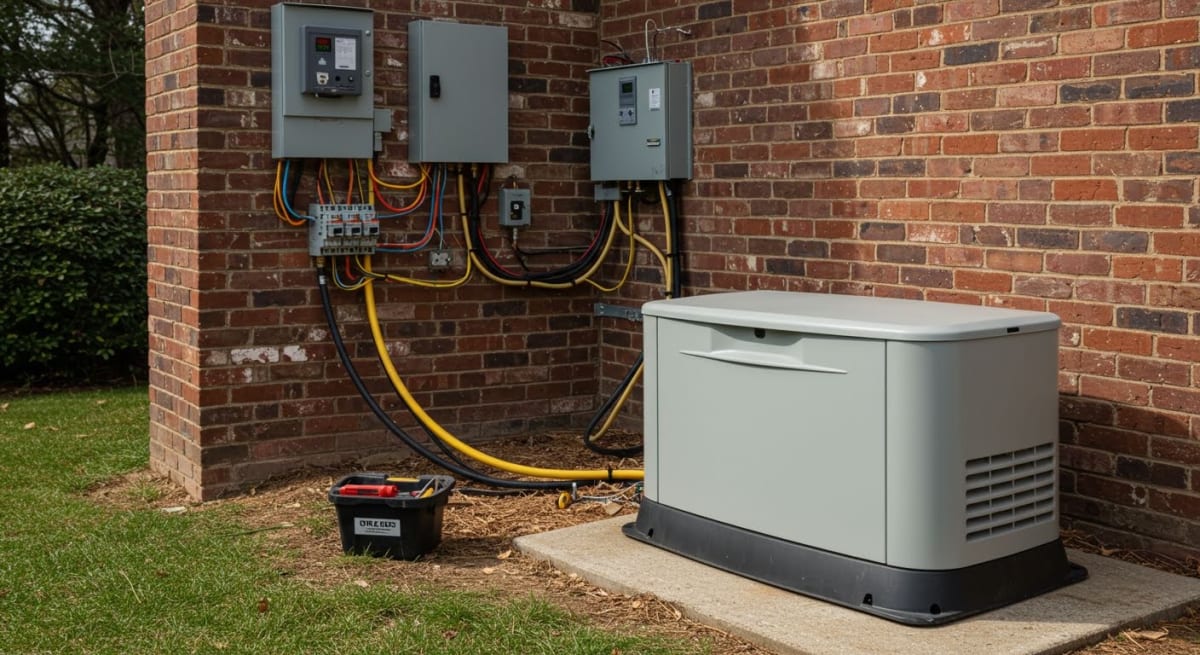
A home backup generator is a power generation system designed to supply electricity to residential circuits when utility power is interrupted, either through automatic transfer switching or manual connection. According to Doctor Electric, “A home backup generator is an electrical power system that automatically or manually provides electricity to your residence during utility power outages, maintaining operation of critical appliances and systems.” These systems ensure your household maintains power continuity during grid failures, severe weather events, and equipment malfunctions at the utility level.
Home backup generators fall into two main categories: portable generators that provide temporary power to select circuits, and permanent standby generators that automatically power your entire home during outages. Portable units require manual setup and connection through transfer switches or inlet boxes, while standby systems integrate directly with your electrical panel and activate within seconds of detecting power loss.
In 2026, the average American household experiences 4-6 power outages annually, with durations ranging from 30 minutes to several days depending on location and weather patterns. 72% of homeowners who experienced power outages lasting more than 4 hours in 2025 installed backup generators within 12 months, recognizing the critical importance of emergency generator systems for protecting their investments and maintaining safety.
Backup power systems become essential when you rely on electricity for critical loads including:
-
Medical equipment such as oxygen concentrators, CPAP machines, and refrigerated medications
-
Refrigeration and freezer operation to prevent food spoilage and financial loss
-
HVAC systems for heating during winter storms and cooling during summer heat events
-
Security systems, communications equipment, and lighting for home protection
-
Sump pumps preventing basement flooding during storms
The ROI calculation extends beyond equipment costs—consider potential losses from spoiled food, frozen pipes, security vulnerabilities, and displacement expenses during extended outages. Licensed Master Electricians at Doctor Electric perform comprehensive load calculations to determine whether your specific electrical demands justify portable or whole house generator installation.
Types of Home Backup Generators: Portable vs. Standby Systems
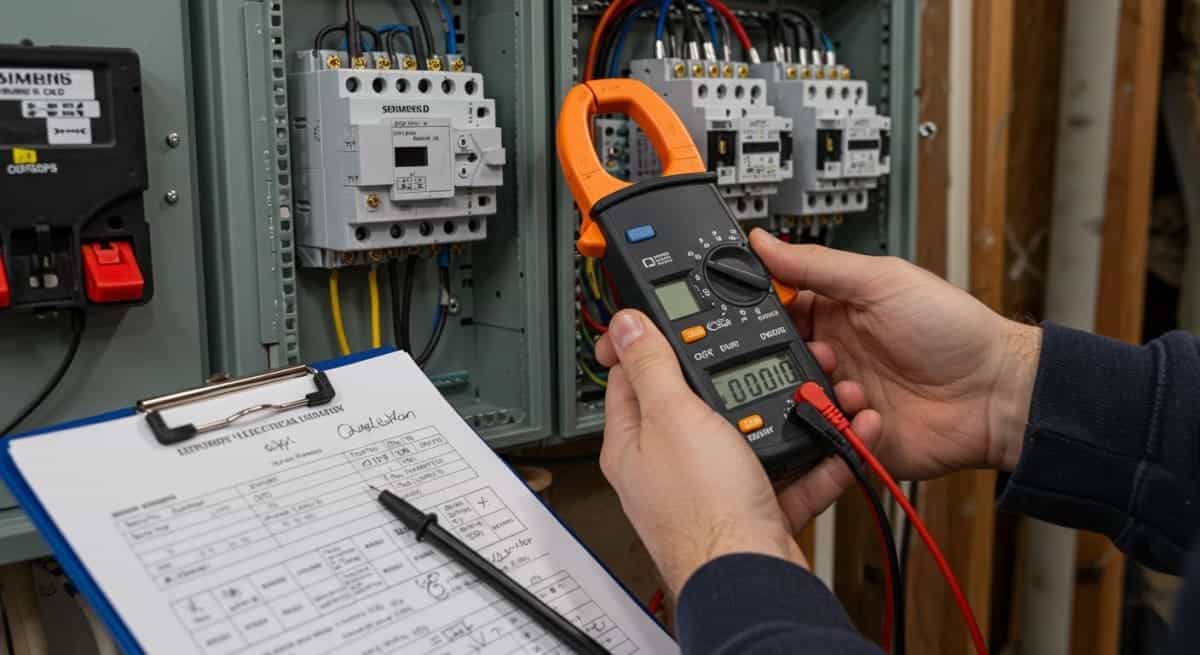
Choosing the right home backup generator depends on understanding the three main categories available in 2026: portable generators, standby generators, and inverter generators. Each type offers distinct advantages for residential power outage protection, with significant differences in installation requirements, operational convenience, and total cost of ownership.
Portable Generators: Flexibility and Lower Cost
Portable generators range from 2,000 to 12,000 watts and run on gasoline, propane, or dual-fuel configurations. These units require manual deployment during outages, meaning you physically start the generator, run extension cords or connect to a manual transfer switch, and refuel every 8-12 hours of operation. Modern standby generators with automatic transfer switches restore power within 10-20 seconds of an outage, while portable generators require 5-15 minutes of manual setup time.
Inverter generators represent a specialized subset of portable units, producing clean sine-wave power safe for sensitive electronics like computers, medical equipment, and home office systems. These models operate quieter than conventional portable generators but typically cost 30-40% more for equivalent wattage.
Standby Generators: Automatic Whole-House Protection
A standby generator is a permanently installed backup power system connected to your home’s electrical panel through an automatic transfer switch, providing seamless power restoration during outages. These whole house generator systems range from 7 kilowatts to 48 kilowatts and connect directly to your natural gas line or large propane tank, eliminating manual refueling.
Our factory-certified generator installation technicians install standby units on concrete pads outside your home, complete with weatherproof enclosures and NEC Article 702 compliant electrical connections. Businesses requiring uninterrupted operations benefit from our commercial generator installation services for larger capacity systems.
Fuel Source Comparison: Natural Gas, Propane, and Diesel
In 2026, natural gas generators account for 58% of residential standby installations, followed by propane at 35% and diesel at 7%. Natural gas offers unlimited runtime through municipal supply lines but delivers 10% less power output than propane. Propane requires tank refills but performs better in extreme cold. Diesel generators provide maximum power density but require more frequent maintenance and generate more noise.
|
Generator Type |
Cost Range |
Installation |
Operation |
Best For |
|---|---|---|---|---|
|
Portable |
$500-$4,000 |
No professional install |
Manual start/stop |
Occasional outages, budget-conscious |
|
Standby |
$10,000-$18,000 |
Professional required |
Fully automatic |
Whole-home protection, convenience |
|
Inverter |
$800-$4,500 |
No professional install |
Manual start/stop |
Sensitive electronics, quiet operation |
Key Insight: Standby generators offer superior convenience and safety through automatic operation, while portable generators provide lower upfront costs but require manual setup and fuel management.
-
Portable generators deliver 2,000-12,000 watts with manual operation and fuel tank refills
-
Standby generators provide 7-48 kilowatts with automatic transfer switch activation
-
Inverter generators produce clean power for computers and medical equipment
-
Natural gas generators connect to municipal lines for unlimited runtime
-
Propane generators require tank installation but work anywhere
-
Diesel generators deliver maximum power density for commercial applications
How to Size a Home Backup Generator: Load Calculation Guide
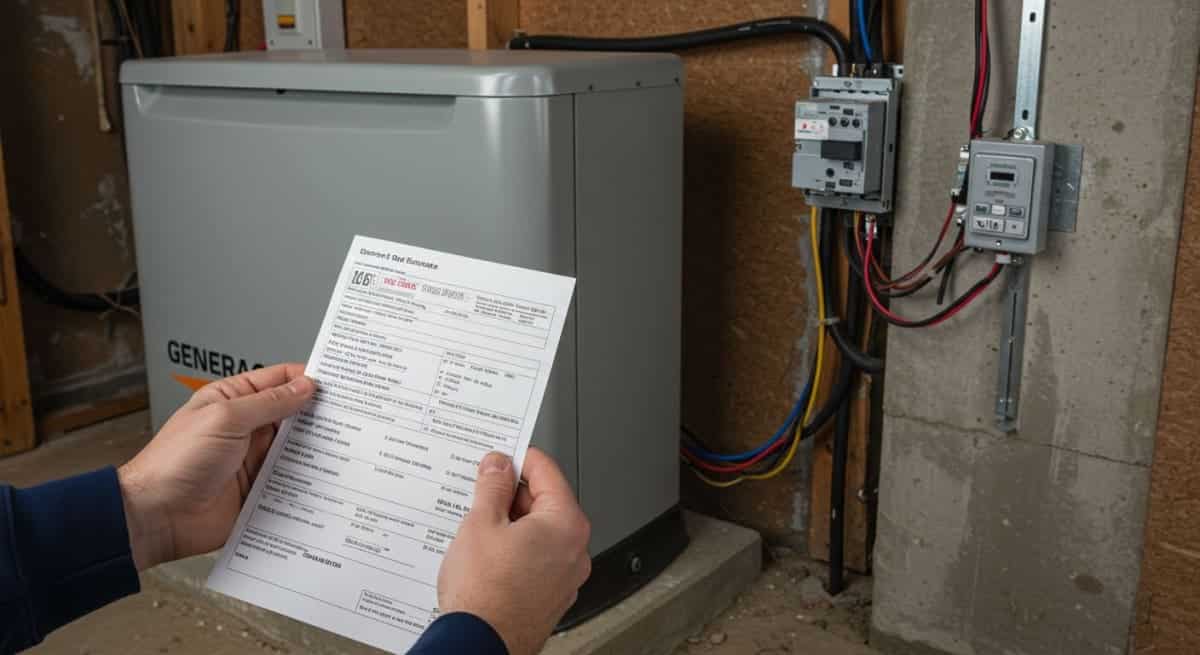
Load calculation is the process of determining total electrical demand by adding the running wattage of all circuits you want to power, plus the starting surge requirements of motor-driven appliances. This critical pre-installation step ensures your standby generator delivers reliable backup power without overloading or wasting money on excessive capacity. Generator load calculation must account for both running wattage and starting wattage, with central air conditioning units requiring 2-3 times their running wattage during startup.
Understanding Running Watts vs. Starting Watts
Every motor-driven appliance in your electrical system draws two distinct power levels. Running watts represent the continuous power needed during normal operation, while starting watts (also called surge watts) represent the brief spike required when motors initially energize. Your home backup generator must handle both demands simultaneously. A 5-ton central air conditioner drawing 5,000 running watts may require 15,000 starting watts for 2-3 seconds during compressor startup—a critical factor in generator capacity planning.
Step-by-Step Generator Sizing Process
Accurate generator sizing requires calculating total running watts plus the highest starting wattage of any single appliance, then multiplying by 1.25 for safety margin. Licensed electricians follow this systematic approach:
-
List all appliances and circuits you want powered during outages
-
Identify running wattage for each item from nameplate data or manufacturer specs
-
Determine starting wattage for motor-driven equipment (typically 2-3x running watts)
-
Add total running watts for all selected circuits and appliances
-
Add the highest single starting wattage requirement to your running total
-
Multiply final result by 1.25 to establish minimum generator capacity
A properly sized home backup generator should produce 1.25 times your home’s peak electrical demand to account for motor starting loads and future capacity needs. This safety factor prevents nuisance tripping and ensures reliable automatic transfer switch operation under all conditions.
Common Appliance Power Requirements
Professional load calculation incorporates actual nameplate data, but these typical values guide initial whole house generator size estimates:
|
Appliance |
Running Watts |
Starting Watts |
|---|---|---|
|
Central AC (3-ton) |
3,500 |
10,500 |
|
Electric Range |
8,000 |
8,000 |
|
Well Pump (1 HP) |
1,200 |
3,600 |
|
Refrigerator |
700 |
2,100 |
|
Sump Pump (½ HP) |
800 |
2,400 |
Undersizing creates voltage sags that damage sensitive electronics and prevent proper HVAC operation. Oversizing wastes installation budget and increases fuel consumption during runtime. A 2,000 square foot home with gas heating typically requires a 16-20kW generator, while all-electric homes of similar size need 22-26kW capacity minimum.
Doctor Electric’s Licensed Master Electricians perform comprehensive electrical panel analysis and generator sizing calculator assessments following National Electrical Code Article 702 requirements. Our factory-certified technicians account for future loads, ensuring your standby generator investment protects your home for years ahead.
Not sure what size generator your home needs? Doctor Electric’s licensed electricians provide free load calculations and generator sizing consultations to ensure you invest in the right backup power solution.
Home Backup Generator Cost: Equipment and Installation Pricing
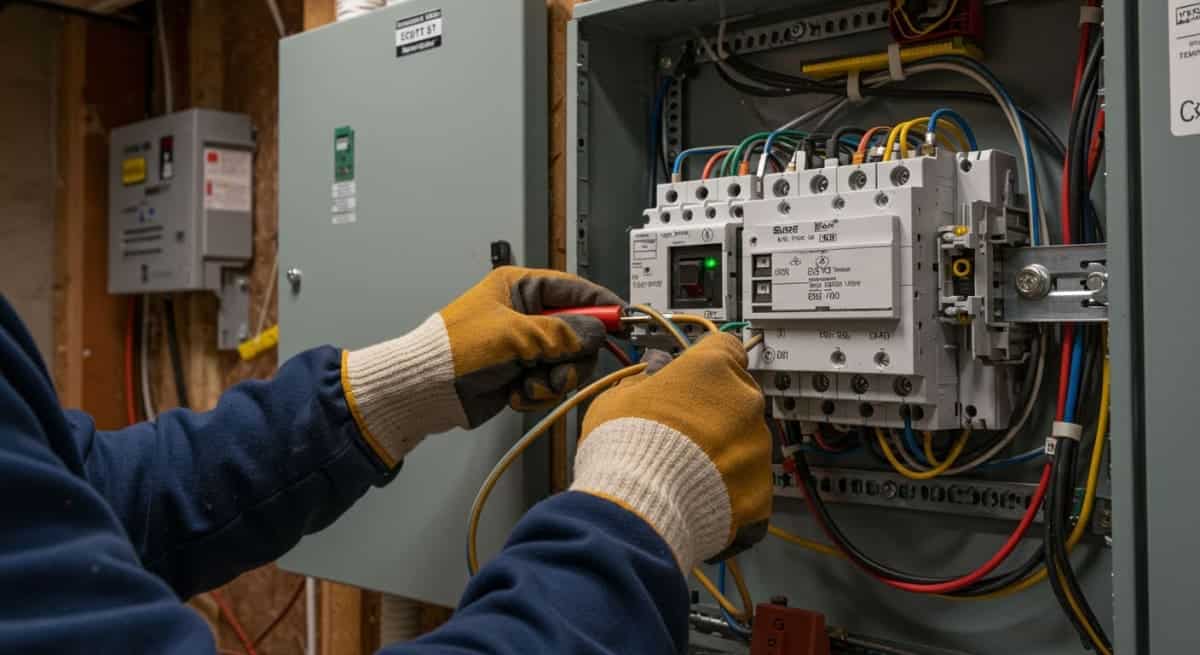
Understanding the total investment required for a whole house generator system helps you budget appropriately and evaluate your backup power options. In 2026, whole-house standby generators range from $5,500 to $17,000 for equipment, with professional installation adding $2,000 to $5,000 depending on transfer switch complexity and fuel line requirements. Total investment for a professionally installed whole-house backup generator system ranges from $7,500 to $22,000 depending on capacity, fuel type, and installation complexity.
Generator Equipment Costs by Size
Standby generator price varies significantly based on power output capacity and fuel type. The equipment cost directly correlates to the kilowatt rating you need to power your essential circuits or entire home.
|
Generator Size |
Power Capacity |
Equipment Cost |
Best For |
|---|---|---|---|
|
7-10kW |
Essential circuits |
$4,500-$6,000 |
Small homes, critical loads |
|
12-16kW |
Partial home coverage |
$5,500-$7,500 |
Medium homes, most circuits |
|
18-22kW |
Whole home standard |
$6,500-$9,000 |
Full home 200A service |
|
24-26kW |
Large home capacity |
$8,500-$11,500 |
Homes with high HVAC loads |
|
30-48kW |
Estate/commercial |
$11,000-$17,000 |
Large estates, light commercial |
Professional Installation Expenses
Generator installation cost encompasses multiple components beyond the equipment itself. Your automatic transfer switch installation typically ranges from $800 to $2,000 depending on whether you select a service-rated transfer switch or a load-center rated unit.
Natural gas line extension costs $15-$25 per linear foot when running from your meter to the generator location, while propane tank installation adds $1,500-$3,000 for a 250-500 gallon tank. Many installations require electrical panel upgrades to accommodate proper transfer switch integration, adding $1,200-$3,000 to your project budget.
Additional installation factors include:
-
Concrete pad installation: $480-$960
-
Permit and inspection fees: $320-$1,280
-
Electrical conduit and wiring: $640-$1,600
-
Load calculation and system design: $240-$640
-
Commissioning and startup: included with professional installation
Ongoing Maintenance and Fuel Costs
Properly maintained standby generators have a service life of 20-30 years, with major component replacement typically needed at 15-year intervals. Annual maintenance contracts from Doctor Electric range from $200-$350 and include oil changes, filter replacement, battery testing, and transfer switch exercising.
Natural gas generators cost approximately $15-$30 per day of continuous operation, while propane units run $40-$75 daily during extended outages. These systems add $150-$350 to your home value for every installed kilowatt, delivering strong ROI while protecting your family from prolonged power disruptions.
Professional Installation Requirements for Home Backup Generators
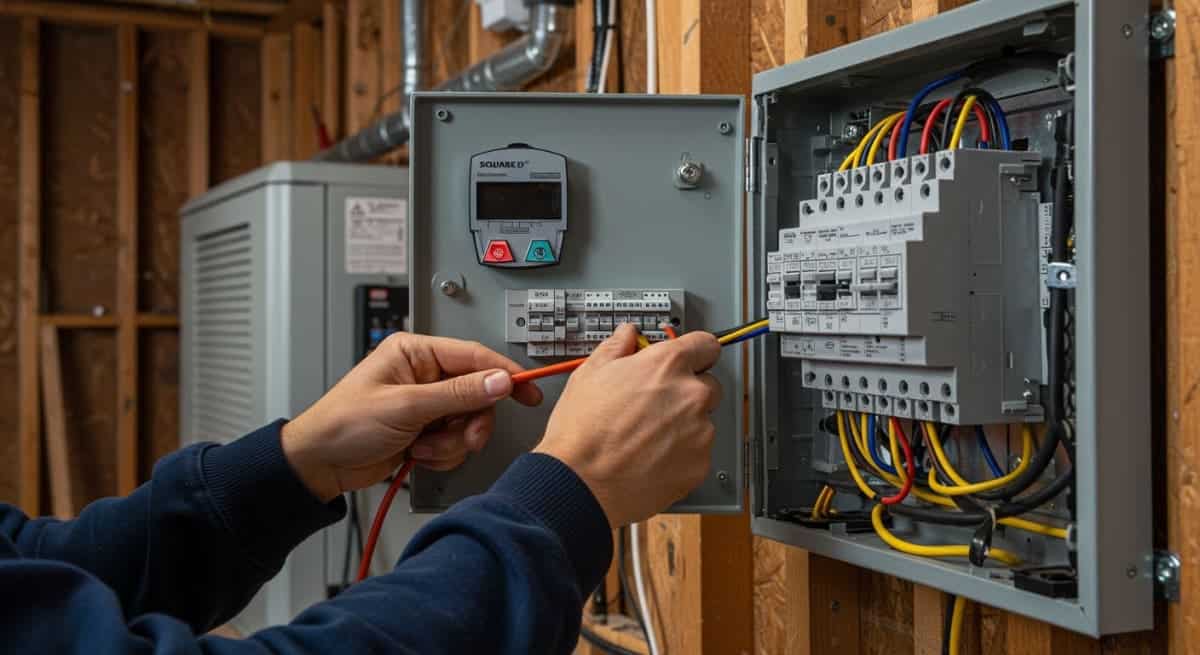
Installation of a whole-house standby generator typically requires a licensed electrician to install the automatic transfer switch, establish proper grounding, and ensure compliance with NEC Article 702 regulations. DIY installation of a home backup generator isn’t just inadvisable—it’s illegal in most jurisdictions and poses serious safety risks including electrocution, fire hazards, and carbon monoxide poisoning. Your generator system integrates directly with your home’s electrical panel and utility service, requiring specialized knowledge that only certified electrical contractors possess.
Why Licensed Electrician Installation Is Essential
Licensed electricians bring critical expertise to standby generator installation that protects your family and property. They perform precise load calculations to determine proper circuit allocation, install disconnect switches at correct amperage ratings, and configure backfeed protection that prevents energizing utility lines during outages. Generator installation permits are required in 94% of US jurisdictions, with inspection failure rates of 23% for DIY installations versus 3% for licensed electrician installations. These failures result in denied permits, costly reinstallation, and voided manufacturer warranties that can exceed $2,000 in replacement coverage.
Code Compliance and Permit Requirements
NEC Article 702 governs optional standby systems and mandates specific installation standards for home backup generators. Your installation must meet requirements including:
-
Proper generator placement with minimum 18-inch clearances from combustible materials
-
Adequate ventilation zones to prevent carbon monoxide accumulation
-
Correctly sized natural gas lines (typically ¾-inch to 1-inch diameter) or propane tank placement meeting setback requirements
-
Grounding electrode system bonding to prevent electrical shock hazards
-
Transfer switch installation with appropriate interrupting ratings
Licensed electricians navigate local permit processes, schedule mandatory inspections, and ensure your system passes code review on the first attempt.
Transfer Switch and Electrical Panel Integration
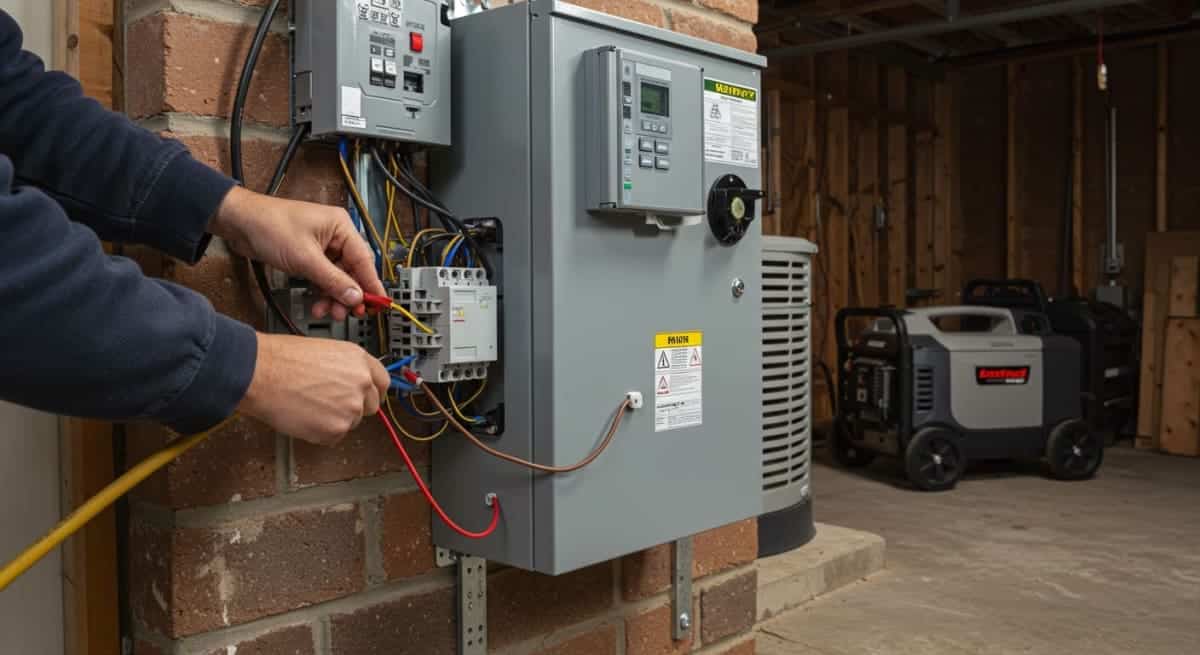
Transfer switch installation represents the most critical component of your home backup generator system. This device automatically disconnects your home from utility power and connects to generator power within 10-15 seconds of an outage. Doctor Electric’s licensed Master Electricians install transfer switches with proper neutral-ground bonding, verify correct phase relationships, and test automatic operation under simulated power failure conditions. Improper transfer switch installation creates backfeed risks that can electrocute utility workers and damage your electrical panel.
Ready to protect your home with professional generator installation? Doctor Electric’s factory-certified technicians handle everything from permits to final inspection. Schedule your free consultation today.
Automatic Transfer Switches: The Brain of Your Home Backup Generator
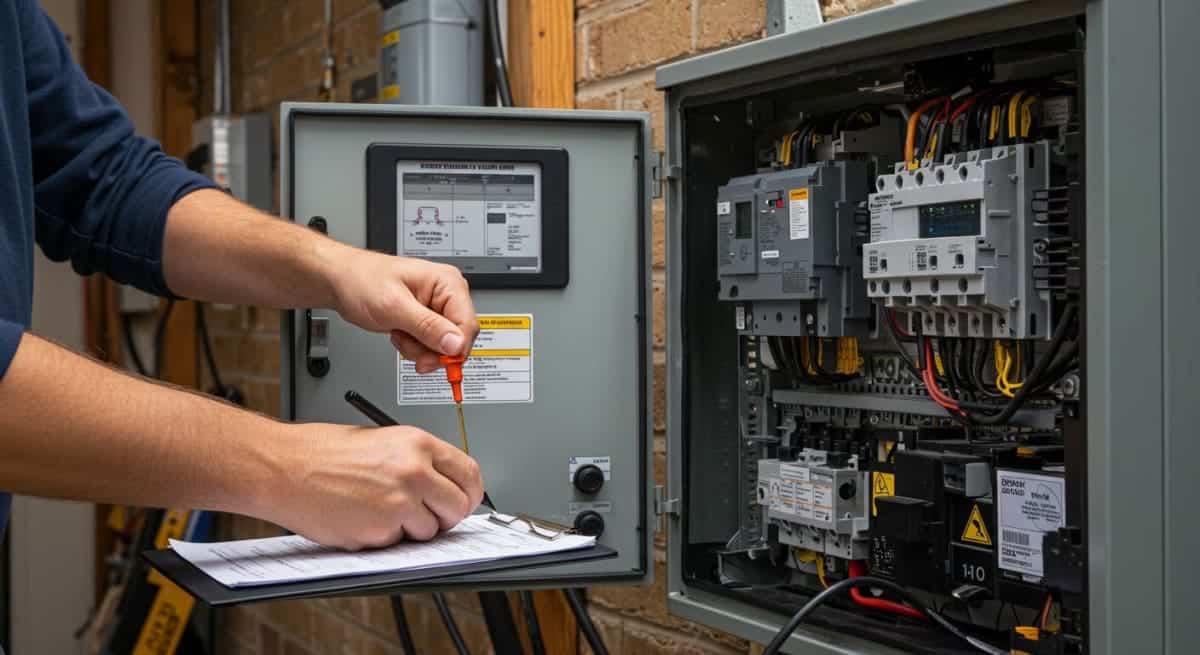
An automatic transfer switch is an electrical switching device that monitors utility power and automatically transfers your home’s electrical load to generator power during outages, then returns to utility power when service is restored. The automatic transfer switch monitors utility power continuously and switches your home to generator power within seconds of detecting an outage, then automatically returns to utility power when restored. This seamless transition happens so quickly that most electronics experience only a brief flicker, similar to a momentary power dip.
When utility voltage drops below acceptable levels or fails completely, the ATS installation sends a start signal to your standby generator. Once the generator reaches proper operating speed and voltage—typically 10 to 30 seconds—the transfer switch executes the changeover. Licensed Master Electricians configure these devices to monitor both legs of your 240-volt service, ensuring complete protection against single-phase failures that homeowners might not otherwise detect.
How Automatic Transfer Switches Work
Inside the transfer switch enclosure, contactors physically disconnect your home from utility power before connecting to generator power, preventing dangerous backfeeding that could electrocute utility workers. Factory-certified generator installation technicians install these safety interlocks according to National Electrical Code Article 702 requirements. Modern smart transfer switches include monitoring capabilities that send alerts to your smartphone when power transfers occur, track runtime hours, and notify you of maintenance needs. Most units retain manual operation capability, allowing electricians to test system function or make controlled transfers during transfer switch maintenance.
Choosing the Right Transfer Switch Capacity
Automatic transfer switches must be rated for the full amperage of the circuits they protect, typically 100A, 200A, or 400A for residential applications. The amperage rating you need depends on whether you’re installing a whole-house system or a load-managed configuration:
-
100A transfer switches work for smaller homes or load-managed systems that power essential circuits only
-
200A generator transfer switches match standard residential service panels for complete whole house generator coverage
-
400A transfer switches serve larger luxury homes or properties with dual 200A panels
Load-managed transfer switches use built-in intelligence to shed non-essential loads like electric water heaters or air conditioning compressors when demand exceeds generator capacity, allowing smaller generators to power more circuits. Doctor Electric’s generator load calculation service determines the exact transfer switch capacity your electrical system requires based on actual connected loads and usage patterns.
Home Backup Generator Maintenance and Service Requirements
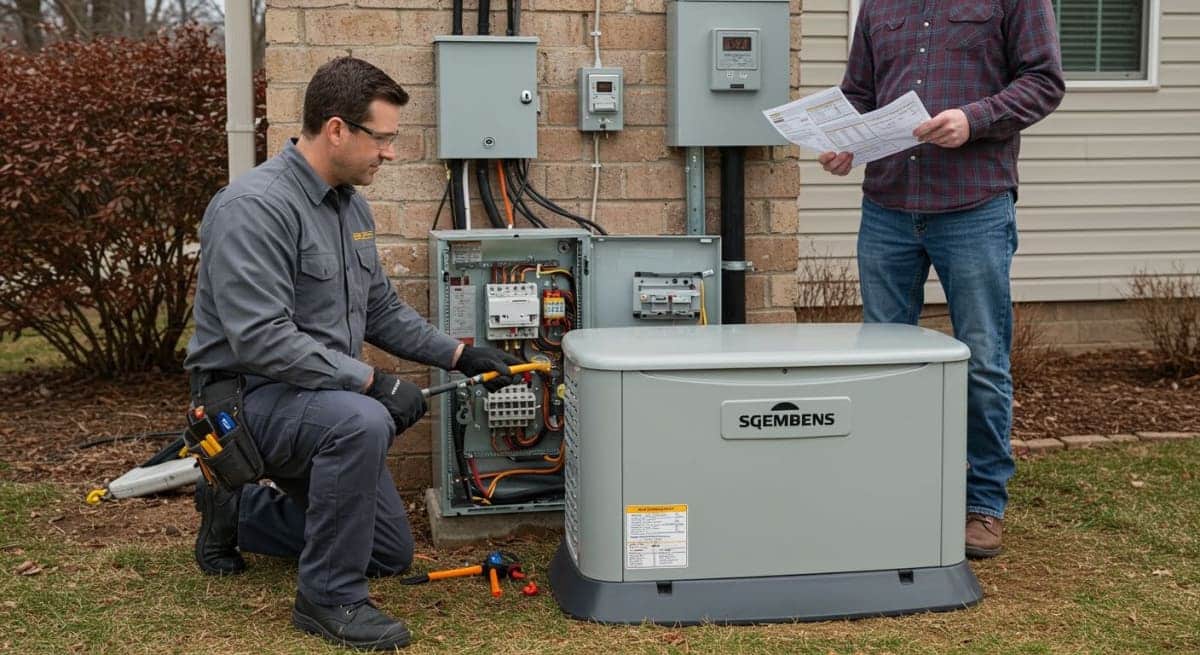
Your home backup generator requires consistent maintenance to ensure reliable operation when power failures strike. Generator maintenance involves both automated self-checks and scheduled professional service to protect your investment and guarantee emergency readiness. The average residential standby generator operates 150-200 hours annually including weekly test cycles and actual outage runtime, making regular upkeep essential for long-term performance.
Weekly self-test cycles are essential for standby generator reliability, allowing the unit to verify starting capability, charge the battery, and circulate oil through engine components. This automated process runs your generator for 12-15 minutes without transferring the load from utility power, exercising critical systems and preventing component degradation from extended dormancy.
Routine Maintenance Tasks
Generator maintenance requires oil changes every 100-200 hours, air filter replacement annually, and weekly self-test runs to ensure reliable emergency operation. Following these intervals prevents premature engine wear and maintains warranty coverage from your manufacturer.
-
Generator oil change every 100-200 operating hours or annually, whichever occurs first
-
Air filter replacement every 12 months or 200 hours in dusty environments
-
Spark plug inspection and replacement every 400 hours or every two years
-
Battery load testing annually with replacement every 3-4 years
-
Fuel system inspection for propane regulator function and natural gas pressure verification
-
Coolant level checks and replacement according to manufacturer specifications
Professional Service Intervals
Annual professional inspections by factory-certified generator installation technicians identify potential issues before they compromise your backup power system. Licensed Master Electricians examine transfer switch operation, electrical connections, and load distribution while verifying code compliance with NEC Article 702 requirements.
Standby generator service includes comprehensive testing of automatic transfer switch timing, voltage output verification, and load bank testing to confirm your unit delivers rated capacity. Seasonal preparation adjusts coolant concentrations for winter protection and ensures proper ventilation for summer operation.
Troubleshooting Common Issues
Warning signs requiring immediate attention include failure to complete weekly self-tests, unusual engine noises during operation, or delayed transfer switch engagement. Battery voltage below 12.4 volts indicates charging system problems, while oil pressure warnings or overheating point to maintenance neglect. If your generator fails to start during an outage or exhibits erratic operation, contact our emergency electrical services for rapid diagnosis and repair to restore your backup power protection.
Choosing the Right Home Backup Generator for Your Needs
Selecting the right home backup generator requires professional load calculation, understanding your budget and coverage priorities, and working with a licensed electrical contractor for proper installation. Start by asking yourself critical questions: Which circuits are essential during outages? How long do power failures typically last in your area? What fuel sources are readily available near your property? These answers form the foundation of your generator selection.
Budget versus coverage represents the most common trade-off homeowners face. Whole house generators provide comprehensive protection but require higher investment, while partial coverage systems protect essential circuits at lower cost. Your generator installation contractor should perform detailed load calculations to determine the minimum capacity needed, then help you decide whether to power everything or prioritize critical systems like HVAC, refrigeration, and medical equipment.
Fuel availability in your area significantly impacts reliability. Natural gas systems offer convenience but depend on utility infrastructure, while propane requires on-site storage with adequate capacity for extended outages. Diesel generators deliver robust performance but need regular fuel management to prevent degradation.
When evaluating the best home generator options, watch for these red flags in installers: unlicensed electricians, lack of manufacturer certifications, no permit acquisition, absence of load calculation services, or unwillingness to provide warranty documentation. The best home backup generator is one that’s properly sized for your actual electrical loads, installed by licensed professionals, and maintained according to manufacturer specifications.
Schedule a backup power consultation with Doctor Electric to receive professional assessment of your electrical system, accurate load calculations, fuel source evaluation, and generator recommendations matched to your specific needs and budget. Our factory-certified technicians ensure NEC Article 702 compliance and manufacturer warranty protection.
Next steps for protecting your home:
-
Document your essential electrical loads and desired coverage level
-
Verify fuel availability and storage requirements for your property
-
Schedule professional load calculation with licensed electrical contractor
-
Compare generator models with appropriate capacity ratings
-
Review manufacturer warranties and local service provider availability
-
Obtain detailed installation quotes including transfer switch and permits
Don’t wait for the next power outage to leave your family in the dark. Contact Doctor Electric now for expert generator selection, professional installation, and reliable service. Call (859) 368-0079 or request your free backup power assessment online.