

Direct Answer
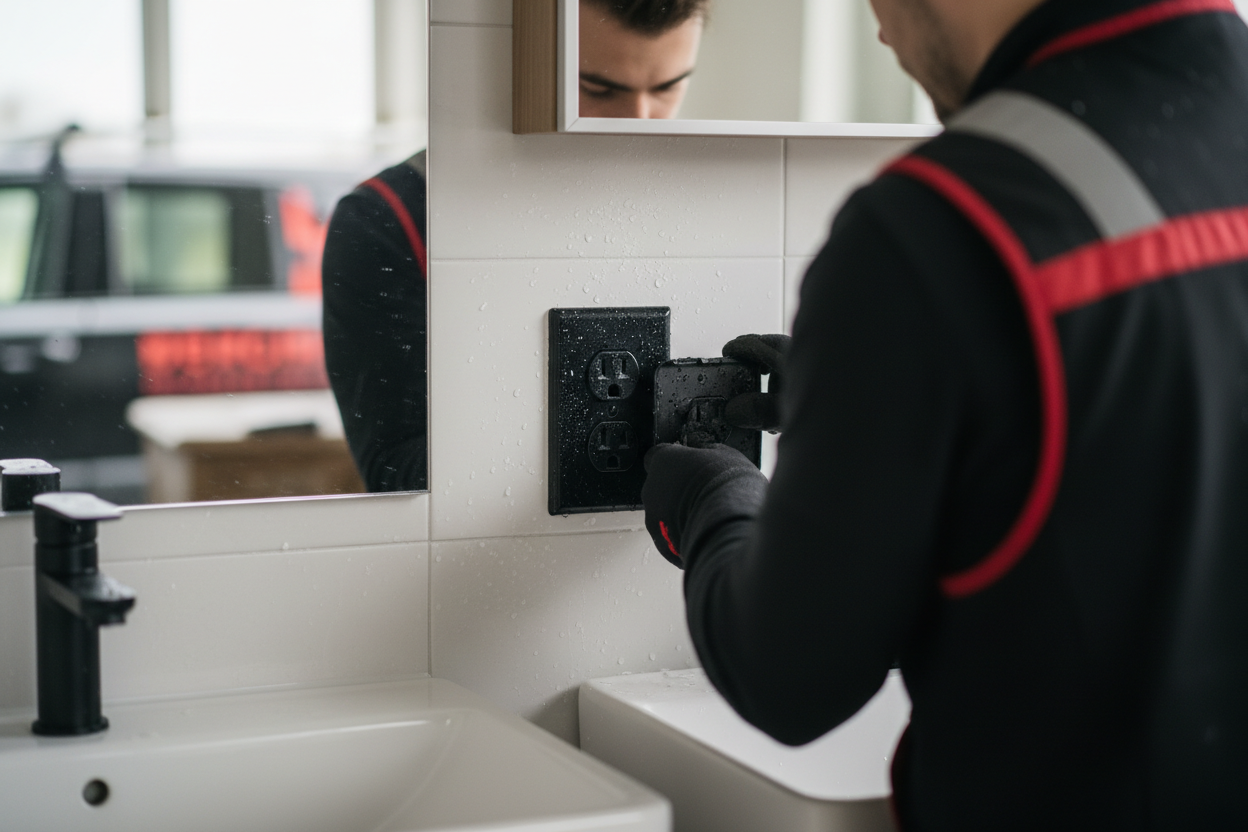
A Ground Fault Circuit Interrupter (GFCI) is the primary action that helps prevent electrical hazards when a floor is wet, detecting ground faults and shutting off power in as little as 1/40th of a second when they detect current leakage. These devices monitor electrical flow constantly, tripping when as little as 5 milliamps escapes the intended circuit. Doctor Electric’s licensed technicians install code-compliant GFCI protection throughout Lexington in bathrooms, kitchens, basements, and outdoor outlets where moisture creates shock risk.
Why Are Wet Floors Such a Serious Electrical Concern?
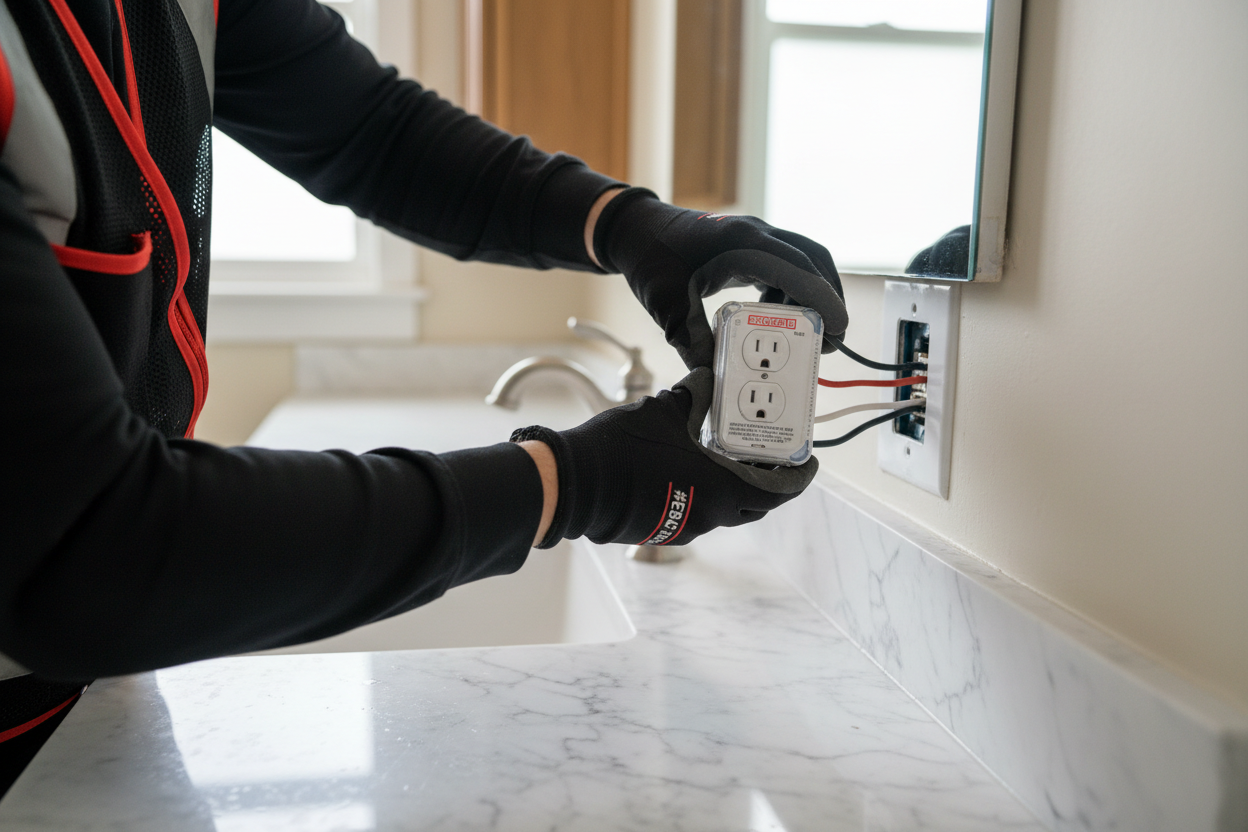
Water doesn’t need to directly contact an electrical outlet to create a hazard—a wet floor creates a conductive path that allows current to flow through your body to ground if you touch a faulty appliance or outlet. This is the physics behind why bathrooms, kitchens, and basement spaces require specialized protection.
Wet skin drops your electrical resistance from about 100,000 ohms to as little as 1,000 ohms. That’s a massive difference. Current as low as 10 milliamps can cause inability to release from an electrical source, according to electrical safety data—less power than it takes to light a small LED bulb. In our years serving Lexington homes, we’ve responded to situations where homeowners thought they were safe because the outlet itself looked dry, not realizing their wet feet on tile or concrete completed the circuit.
How Ground Faults Happen in Wet Locations
A ground fault is an unintended electrical path between a power source and a grounded surface that diverts current away from its intended circuit. When a faulty appliance or damaged outlet allows electricity to “leak,” it looks for the easiest path to ground. On a dry floor wearing rubber-soled shoes, you’ve got decent protection. But standing barefoot on wet tile? You become that path.
Which action helps prevent electrical hazards when a floor is wet? GFCI protection shuts off power in milliseconds when it detects current taking an unintended path. The National Electrical Code requires GFCI outlets in wet locations precisely because standard circuit breakers won’t trip fast enough to prevent electrical shock in these conditions. Many older Lexington homes built before 1990 don’t have adequate GFCI coverage, especially in basements and garages where concrete floors stay damp.
GFCI Protection: Your First Line of Defense Against Wet Floor Hazards
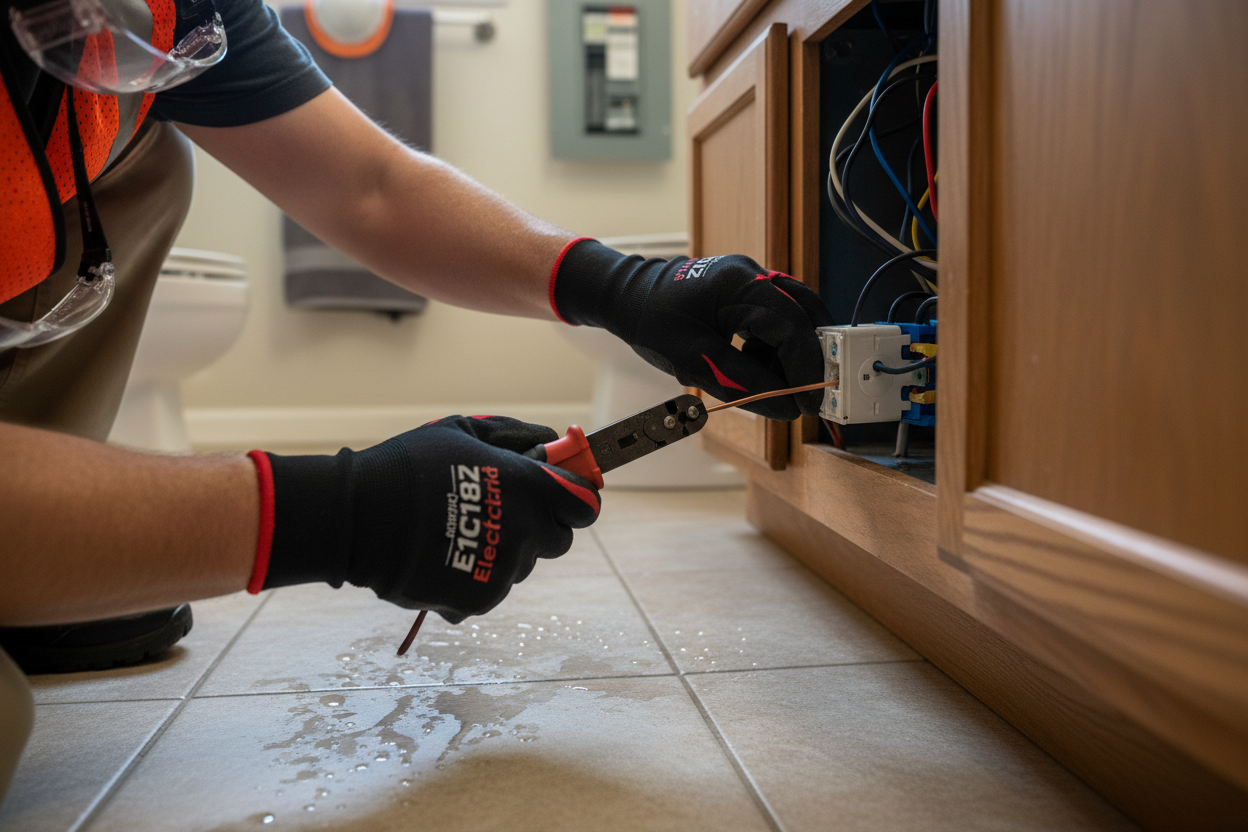
When someone asks which action helps prevent electrical hazards when a floor is wet, the answer is simple: install GFCI protection. These devices monitor the flow of electricity through a circuit and detect even the tiniest imbalances—as small as 4 to 6 milliamps. That’s about one-tenth the current needed to cause a serious shock. And they react fast. A GFCI trips the circuit in just 0.025 seconds when it detects a ground fault, shutting off power before you can even feel it.
Doctor Electric’s licensed technicians find that over 60% of older Lexington homes built before 1990 lack adequate GFCI protection in critical wet areas like basements, garages, and outdoor outlets. We saw this firsthand on a recent project in Chevy Chase, where a 1970s home had just one GFCI outlet in the entire house. After updating the bathroom and adding proper GFCI protection throughout the wet areas, the homeowners finally had the peace of mind that comes with code-compliant safety.
How GFCI Devices Work
GFCI devices provide millisecond protection by detecting tiny current imbalances and shutting off power before dangerous shock can occur, making them the single most important safety device for wet locations. They constantly measure the current flowing out through the hot wire and back through the neutral wire. If water creates an unintended path to ground—say, through your body when you’re standing on a wet floor—the GFCI senses that difference and kills the power instantly.
Types of GFCI Protection for Your Home
You’ve got three main options for ground fault circuit interrupter requirements in your home:
- GFCI outlets – Replace standard receptacles in bathrooms, kitchens, garages, and outdoor locations
- GFCI circuit breakers – Protect entire circuits from your electrical panel
- Portable GFCI devices – Temporary protection for extension cords and power tools
Not sure if your Lexington home has adequate GFCI protection? Doctor Electric provides comprehensive safety inspections with upfront pricing. Call (859) 368-0079 to schedule your GFCI outlet installation and home wellness check.
Where Does Kentucky Code Require GFCI Protection in 2026?
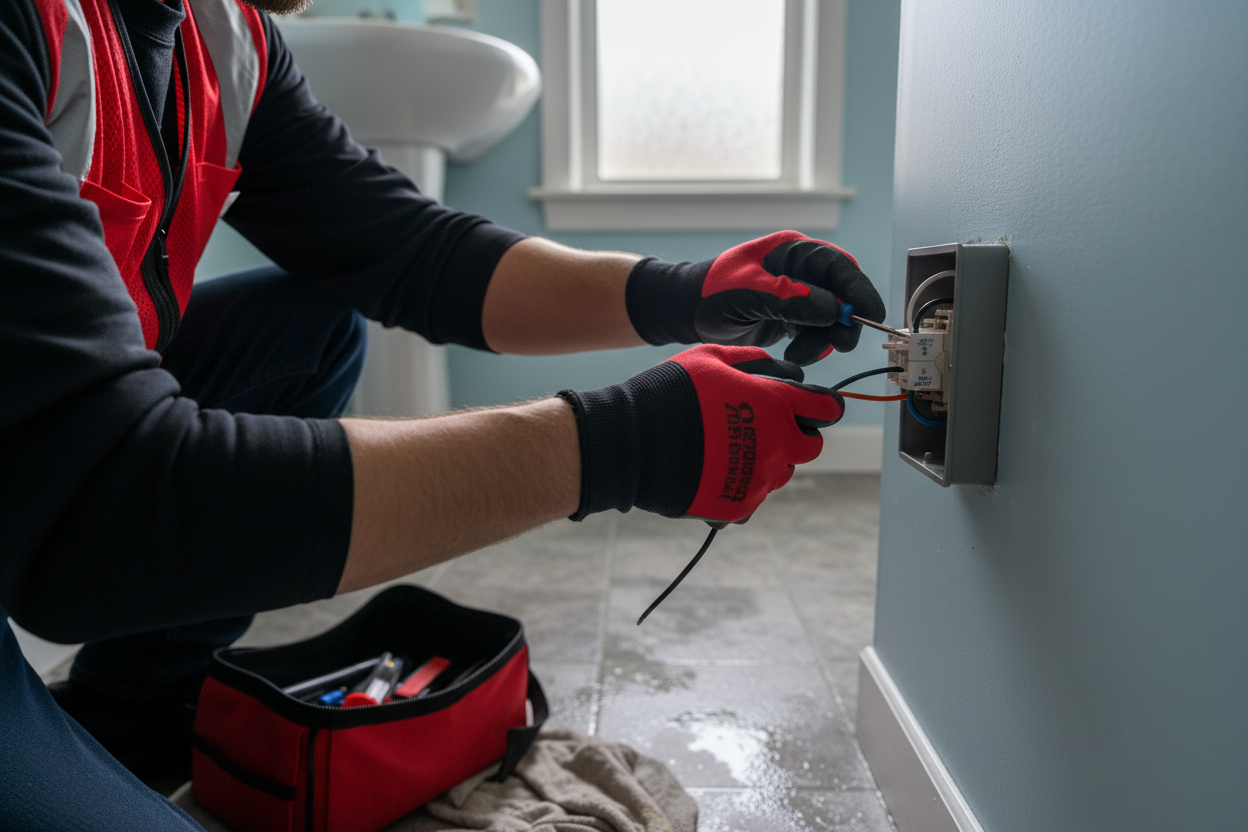
Kentucky adopted the 2023 National Electrical Code in January 2024, and it changed where you need GFCI protection throughout your home. Under the 2023 National Electrical Code adopted in Kentucky, GFCI protection is now required for all 125-volt through 250-volt receptacles in bathrooms, kitchens, laundry areas, basements, garages, and all outdoor locations.
But here’s what most homeowners don’t realize. The new requirements also cover spaces that previously got a pass—crawl spaces, unfinished storage areas, and certain indoor locations near water sources. We’re seeing a lot of older homes in the Chevy Chase area that need updates to meet current GFCI outlet requirements Kentucky enforces during inspections.
Current National Electrical Code Standards
A wet location is any area where water accumulation is expected during normal use—think outdoor receptacles, pool equipment areas, or basement floors subject to moisture. The NEC electrical code now treats these areas with stricter safety standards than ever before.
The key change? Distance requirements got more specific. Kitchen countertop receptacles within six feet of a sink must have GFCI protection. That action helps prevent electrical hazards when a floor is wet or when you’re handling appliances with damp hands near water sources.
GFCI Requirements by Location
| Location | NEC Section | Specific Requirement |
|---|---|---|
| Bathrooms | 210.8(A)(1) | All receptacles |
| Kitchens | 210.8(A)(6) | Within 6 feet of sink edge |
| Laundry Areas | 210.8(A)(10) | All receptacles |
| Basements | 210.8(A)(4) | Unfinished areas and wet bar sinks |
| Garages | 210.8(A)(2) | All accessible receptacles |
| Crawl Spaces | 210.8(A)(4) | All 125-250V receptacles |
Kentucky’s adoption of the 2023 NEC expanded GFCI requirements significantly, now covering areas like crawl spaces, unfinished basements, and even some indoor locations previously exempted. If you’re buying a home or planning electrical code compliance central Kentucky inspectors will verify, getting a safety inspection helps identify where upgrades are needed. Our licensed technicians handle the permits and can integrate GFCI protection during electrical panel upgrades if your home needs broader updates.
Beyond GFCIs: Additional Safety Practices for Wet Floors and Electrical Systems
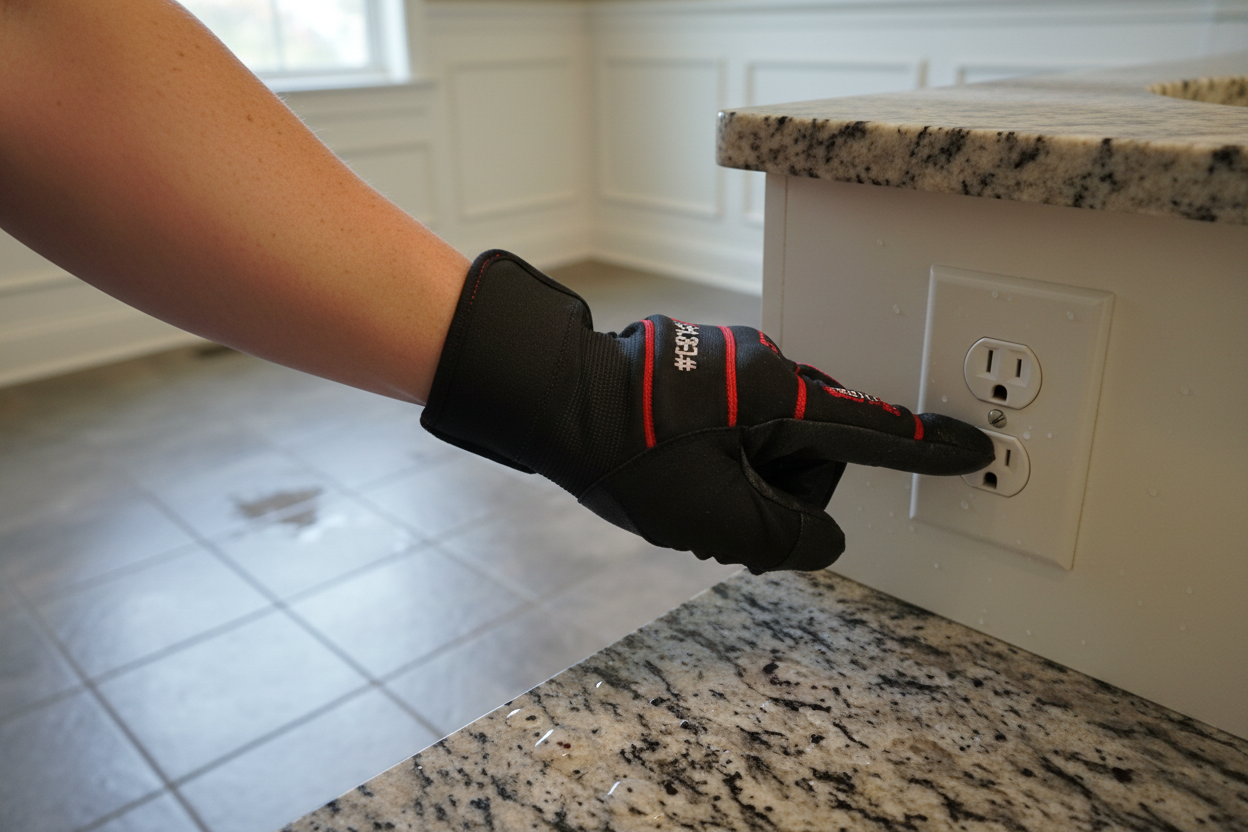
Installing GFCIs is the first line of defense, but understanding which action helps prevent electrical hazards when a floor is wet requires a broader approach to electrical safety water hazards. Here’s what we see working in central Kentucky homes where basements flood during spring storms and bathroom remodels create temporary wet conditions.
Safe Work Practices Around Water and Electricity
- Wear rubber-soled shoes when working near water and electrical equipment—this insulation between you and the ground can save your life
- Never use extension cords or portable appliances in wet areas, even temporarily during renovations
- Keep electrical devices at least 3 feet from sinks, tubs, and water sources as required by current NEC standards
- Clean up spills near outlets and electrical panels immediately—water conducts electricity even after the source stops
- Install weatherproof covers on outdoor outlets exposed to rain, especially in covered porch areas common in Chevy Chase neighborhoods
- Ensure proper drainage around electrical equipment to prevent water accumulation during Kentucky’s heavy spring rainfall
Never use extension cords or portable heaters in areas where floors may become wet—this creates a direct path for electrical current through water that even GFCI protection may not respond to quickly enough.
What to Do If Electrical Equipment Gets Wet
Shut off power at the breaker before approaching wet electrical equipment. Don’t touch anything until you’ve confirmed the circuit is de-energized. We’ve responded to situations where homeowners used shop vacs near flooded basements without verifying GFCI protection first—that’s a potentially fatal mistake.
If you’re dealing with water near electrical panels or can’t safely reach the breaker, call for emergency electrical service immediately. Wet location electrical safety isn’t worth risking your life.
When Should You Have a Licensed Electrician Inspect Your GFCI Protection?

You should test your GFCI outlets monthly using the built-in test and reset buttons. Press the test button—the outlet should click and cut power immediately. Then press reset to restore power. Takes 10 seconds per outlet, but honestly, most homeowners skip this step until something goes wrong.
GFCI outlets should be tested monthly using the built-in test and reset buttons to ensure they trip within the required timeframe—Doctor Electric’s safety inspections reveal approximately 30% of existing GFCIs fail this test due to age or internal corrosion. That’s a significant number, especially in older homes throughout Chevy Chase and downtown Lexington where moisture exposure accelerates deterioration.
Signs You Need Professional GFCI Service
Call licensed electricians in Lexington when you notice these warning signs:
- GFCI won’t reset after tripping—usually means internal failure
- Test button doesn’t trip the outlet at all
- Outlet trips constantly without a clear moisture concern
- Visible burn marks, melted plastic, or buzzing sounds
- Your home was built before current NEC requirements
Regular testing and professional inspection of GFCI protection ensures continued safety, with replacement needed when devices fail to trip or reset properly—approximately every 10-15 years even without visible damage.
Professional GFCI service from Doctor Electric includes comprehensive electrical safety inspections that identify which action helps prevent electrical hazards when a floor is wet—proper GFCI installation in all required locations. Serving Lexington with upfront pricing for GFCI retrofits and installations. Call (859) 368-0079 today.
Frequently Asked Questions About Electrical Safety and Wet Floors
What should I do immediately if an outlet or appliance gets wet in my Lexington home?
Turn off power to that circuit at your electrical panel before touching anything. Never attempt to unplug a wet appliance while standing on a wet floor—which action helps prevent electrical hazards when a floor is wet starts with cutting power at the source. Once power is off, allow the outlet or appliance to completely dry for at least 24 hours. Have our licensed technicians inspect the outlet before restoring power to ensure no internal damage occurred. If the outlet wasn’t GFCI-protected, we recommend upgrading to meet current safety standards—especially in older Lexington homes built before 1990 that often lack proper wet-location protection.
How often should GFCI outlets be tested?
Test GFCI outlets monthly by pressing the ‘Test’ button—the outlet should immediately shut off power and the ‘Reset’ button should pop out. Press ‘Reset’ to restore power. If the outlet doesn’t trip when tested, or won’t reset, it has failed and needs immediate replacement. Doctor Electric recommends professional testing during annual safety inspections, as approximately 30% of older GFCIs fail testing even when they appear to work normally, based on our experience serving central Kentucky families.
Can I install GFCI protection myself, or do I need a licensed electrician in Lexington?
While replacing an existing outlet with a GFCI outlet is technically possible for experienced DIYers, we strongly recommend professional installation. GFCI devices require proper wiring of line and load connections, correct grounding, and testing to ensure they function properly. Incorrect installation creates a false sense of security—the outlet appears to work but provides no actual protection. Licensed electricians ensure code-compliant installation with permits handled for your safety and home value.
Why does my GFCI outlet keep tripping even when the floor isn’t wet?
Frequent GFCI tripping usually indicates a real concern: a ground fault in the circuit, moisture in wiring, a failing appliance, or improper GFCI installation. Less commonly, very old GFCIs become oversensitive and trip unnecessarily. Never ignore frequent tripping by simply resetting the outlet—this defeats the safety purpose. Doctor Electric’s team can diagnose the root cause, repair any wiring concerns, and determine whether the GFCI itself needs replacement.
Are GFCI outlets required in older Lexington homes, or just new construction?
Current electrical code requirements apply to new installations and major renovations, but existing homes are typically grandfathered. However, we strongly recommend GFCI retrofits for all wet locations regardless of home age—the protection they provide is essential for your family’s safety. Many homes in Chevy Chase and other historic neighborhoods built before 1990 lack GFCIs in bathrooms, kitchens, garages, and outdoor outlets. Insurance companies increasingly expect modern safety features, and GFCI upgrades add value when selling your home.
What’s the difference between a GFCI outlet and a GFCI circuit breaker?
A GFCI outlet provides ground fault protection only for devices plugged into that specific outlet and any outlets wired downstream from it. A GFCI circuit breaker protects the entire circuit from the electrical panel, covering all outlets and fixtures on that circuit. GFCI breakers cost more but provide whole-circuit protection and are ideal for situations where multiple outlets need protection or where outdoor wiring requires GFCI compliance. Doctor Electric can assess which solution works best for your specific situation and budget. The key takeaway: proper GFCI protection—whether at the outlet or breaker level—creates a critical safety barrier between wet conditions and dangerous electrical shock.